
Last updated October 16, 2026
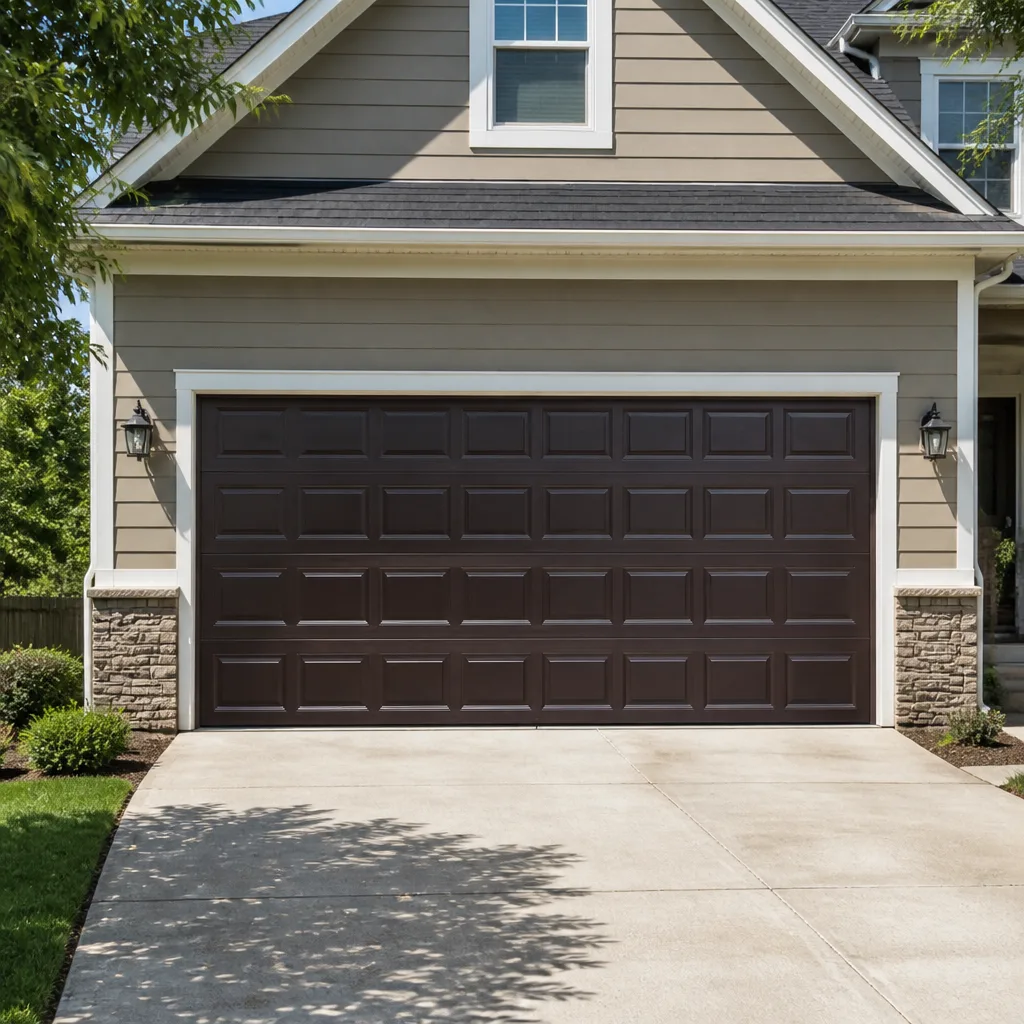 Raised-panel steel
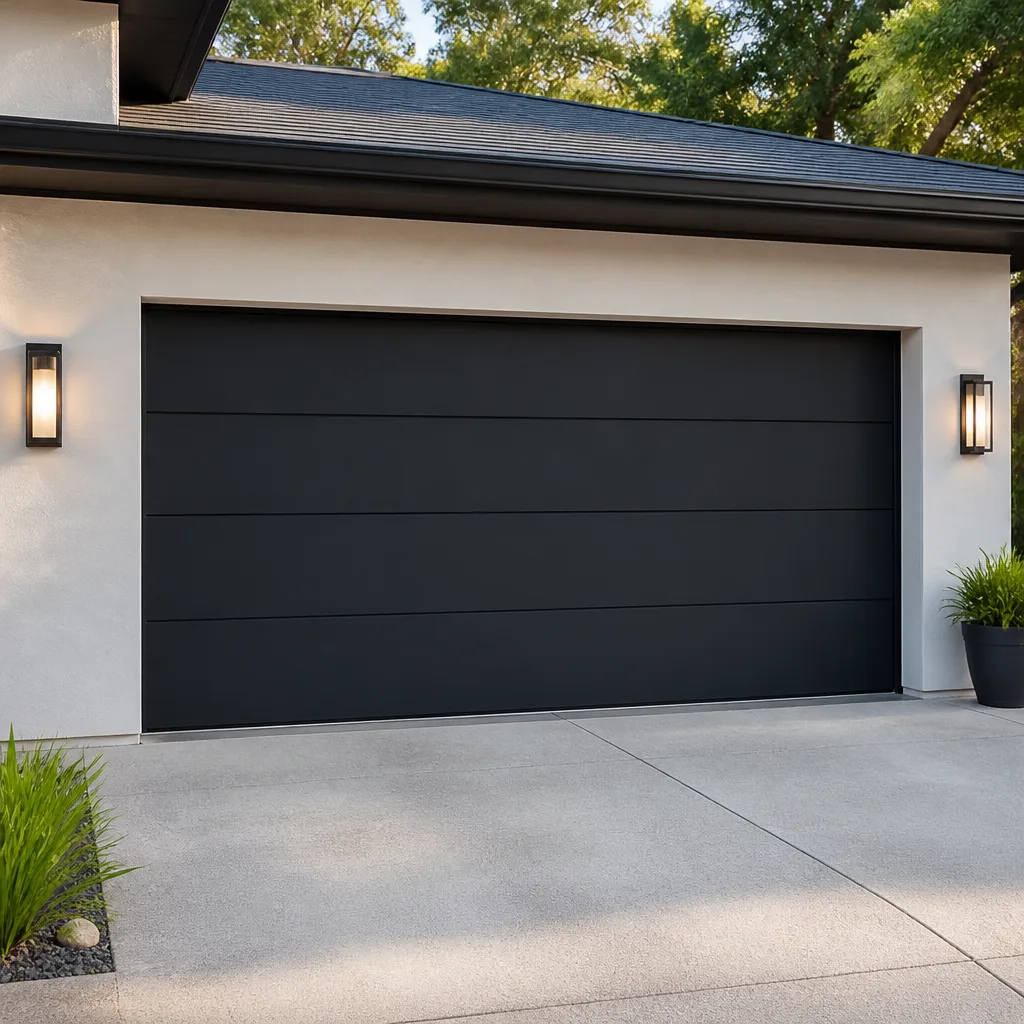 Modern flush
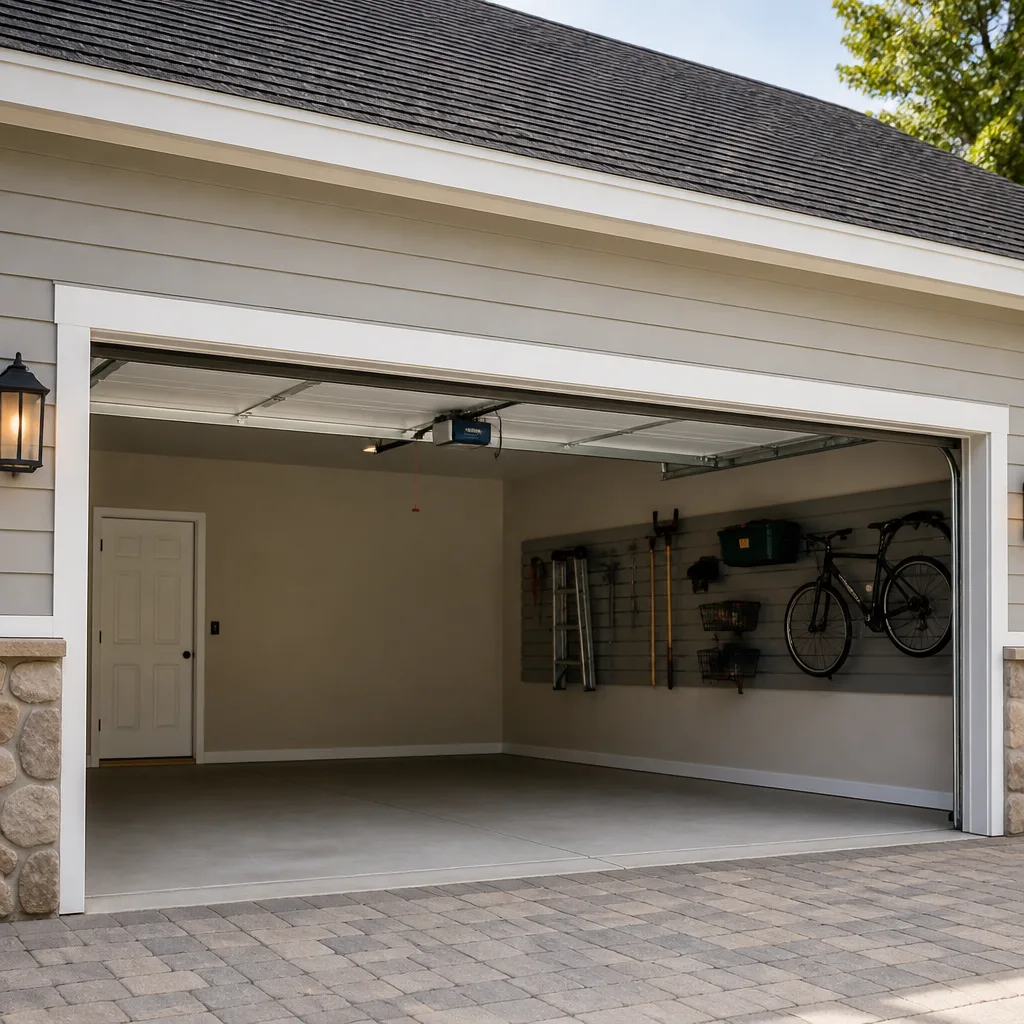 LiftMaster openers
Full 25-point door and opener safety check with every visit - springs, cables, rollers, tracks, and your LiftMaster or Chamberlain opener included
You get a price before we start. It does not change when the truck arrives.
Get your free estimateGarage Door Repair Maintenance Checklist for Houston Homeowners
Most garage door maintenance advice floating around the internet was written for Minneapolis or Chicago. It tells you to lubricate hinges in January and check weatherstripping before the first snowfall. Follow that calendar in Houston and you’ll spend your energy on the wrong month entirely. The truth is, Houston garage doors fail on a different clock. The stress peaks in August, when the metal has been baking at 100 degrees for six weeks straight, and again in September, after a tropical storm has shoved saltwater and debris into every track and roller. This guide is built around that calendar, not the one that assumes you’re shoveling snow. We’ve been repairing garage doors in Houston since 2001, and the failures we see are predictable, preventable, and tied to specific months. Here’s the checklist that actually matters here.
Styles & brands we work with
Quick Answer
A Houston garage door maintenance checklist should follow a twice-yearly rhythm: a full inspection and lubrication in April (before summer heat hits) and again in October (after hurricane season ends). Each check takes about 45 minutes and covers the torsion spring, rollers, hinges, tracks, safety sensors, opener force settings, and bottom seal. Homeowners can safely handle about 80% of this checklist themselves, but the spring inspection and any track realignment should involve our Garage Door Repair services.
Table of Contents
- The Houston Maintenance Calendar: April and October, Not January and December
- Lubrication Products That Survive Houston Heat
- Inspecting the Bottom Seal for Slab Movement Gaps, Not Just Wear
- Four Balance and Tension Checks You Can Safely Do Yourself
- What a Post-Tropical-Storm Inspection Must Cover
- Opener Maintenance: Force Settings, Limit Switches, and Safety Sensors
- Common Mistakes to Avoid
- When to Call a Professional
- Frequently Asked Questions
- The Bottom Line
The Houston Maintenance Calendar: April and October, Not January and December
Houston has exactly two seasons that matter for your garage door: the blistering stretch from May through September and the tropical storm window from June through November. Everything else is background noise. So we run our maintenance calendar on two anchor months.
April: This is the pre-summer reset. Temperatures are still bearable. You have a six-week window before the heat really settles in. The goal in April is to catch anything that will fail under heat stress. Metal expands when it gets hot. A torsion spring that’s already fatigued from years of cycles will snap more readily in August than in February, because the heat adds expansion pressure to an already weakened coil. Grease thins out in summer. Rubber seals soften and sag. April is when you inspect all of it, before the conditions that exploit weakness arrive.
October: This is the post-storm reset. Hurricane season officially runs through November, but October is when most Houston homeowners can find a dry weekend. The goal after a tropical weather event is different from the goal before summer. You’re not looking for heat fatigue. You’re looking for water intrusion, rust bloom, track misalignment from wind pressure, and debris packed into places it shouldn’t be.
If you only do two maintenance sessions per year, do them in April and October. If you want a lighter touch in between, a quick five-minute visual check in January and July is plenty. Just don’t confuse that visual check with the full inspection, and don’t follow a northern calendar that tells you January is the critical month. It isn’t here.
We’ve worked on garage doors across Harris County, Fort Bend County, and Montgomery County. The doors that run quietly for fifteen or twenty years are almost always the ones whose owners kept this April-and-October rhythm. The doors that fail suddenly in August are the ones that hadn’t been touched since installation.
Lubrication Products That Survive Houston Heat
Here’s a counterintuitive fact that saves Houston homeowners a lot of frustration: the most popular garage door lubricant on the shelf at big-box stores is often the worst choice for Houston’s climate. Heavy greases and petroleum-based sprays work fine in Minnesota, where the goal is to cut through cold-weather stiffness. But in Houston, heat changes the chemistry. A heavy grease will thin and run in a 140-degree garage. Then it collects dirt and pollen, turns into a gritty paste, and accelerates the wear it was supposed to prevent.
What does work in Houston heat:
- White lithium grease (spray, not paste): For hinges and bearing points. It clings well, resists washout, and stays put through a Houston August. Apply it lightly. More is not better.
- Silicone spray lubricant: For the torsion spring and tracks. It’s thin enough to penetrate coil gaps without attracting grit. This is what we use on garage door spring repairs in Houston after replacement, to make sure the new spring settles without dry friction.
- Dry PTFE (Teflon) spray: The best choice for nylon rollers and the lock mechanism. It leaves a dry film, so dust doesn’t stick. This matters in Houston, where construction dust, pollen, and Gulf humidity combine into a fine abrasive that settles on everything.
What to avoid in Houston specifically:
- WD-40: It’s a solvent, not a lubricant. It cleans, then it evaporates and leaves parts drier than they were. A quick spray on a squeaky hinge will quiet it for a day and accelerate wear over the long run.
- Heavy axle or bearing grease: It will drip in summer, pool at the bottom of the track, and collect a gritty coating that grinds into rollers.
- Whatever’s already in the garage: Old motor oil, chain lube, anything not intended for garage door hardware. These break down under heat and humidity in ways their manufacturers never intended.
Lubricate twice a year, in April and October. A quick re-coat in July is fine if the door sounds dry, but two proper sessions per year is the baseline. If you’re not sure what’s on your door already, wipe down the track with a clean dry rag first, then apply the right product for the part.
Inspecting the Bottom Seal for Slab Movement Gaps, Not Just Wear
Every generic garage door maintenance article tells you to check the bottom seal for cracks and brittleness. That’s fine, but it misses the more common Houston problem: slab movement gaps.
Houston sits on expansive clay soil. It swells when wet and contracts when dry. Over years of wet springs and dry summers, concrete garage slabs shift. They don’t shift by feet or even inches, just fractions of an inch at a time. But that’s enough. When the slab settles unevenly, the garage door no longer sits flush against the concrete. The result is a gap between the bottom seal and the floor, usually larger on one side than the other, even when the rubber seal itself is in perfect condition.
Here’s how to check for this, step by step:
- Close the garage door. Stand inside, with the overhead light on, and look at the seam where the door meets the floor.
- Look for daylight. Any sliver of light coming under the seal means a gap. A small one is cosmetic. A wide one is an entry point for water, bugs, and rodents.
- Check the gap shape. If the gap is wider on one side than the other, that’s slab movement, not a worn seal. A worn seal fails evenly. An uneven gap means the floor has moved.
- Spray a garden hose along the bottom of a closed door. This simulates a heavy Houston downpour. Watch whether water runs under the seal. This test tells you more in two minutes than a visual inspection does in ten.
If you find an uneven gap, the fix is usually a thicker bottom seal or a threshold seal installed on the concrete itself, not door repair. A good garage door technician in Houston deals with this pattern constantly and can recommend the right profile for your specific gap. If you’re in an older neighborhood like Timbergrove or Oak Forest, where slabs have had fifty-plus years to move, this is a near-universal issue.
Four Balance and Tension Checks You Can Safely Do Yourself
Balance testing is the single most useful diagnostic a homeowner can perform on a garage door. It doesn’t require tools beyond a step stool and a marking pencil. It tells you whether the springs are doing their job. And it takes five minutes.
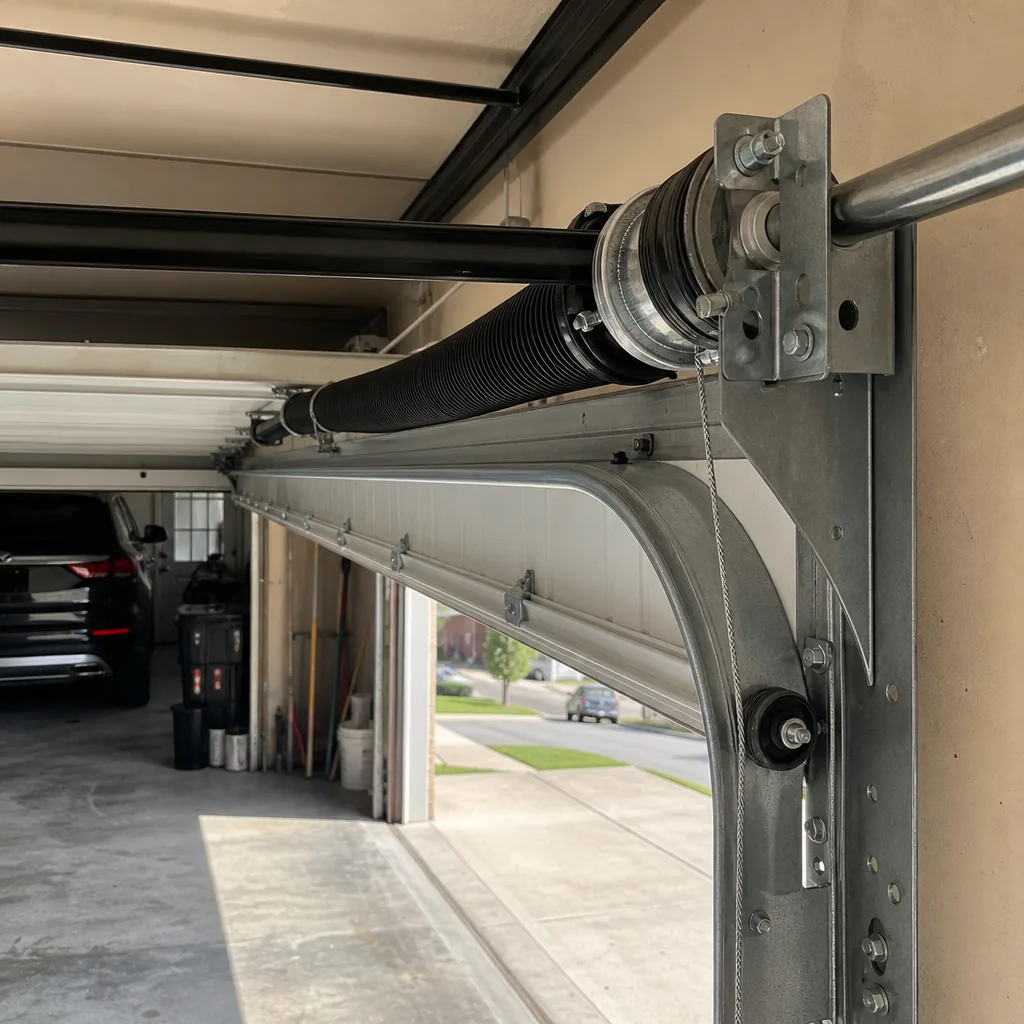
What balance means, in plain terms: The torsion spring above the door, the heavy coil that handles most of the lifting weight, is designed to hold the door at any height, not just the top and bottom. When the door is balanced, it won’t drop or rise on its own from a half-open position. When springs lose tension (which happens gradually as they age and cycle), the opener motor takes on more and more weight until something fails, usually the opener gear or the spring itself.
Check 1: The Half-Open Balance Test
- Pull the red emergency release cord. This disconnects the door from the opener. You’re now testing the door’s own springs, not the motor.
- Lift the door by hand until it’s roughly halfway up, about waist height.
- Let go.
- What should happen: The door stays put. It might drift an inch either way, but it shouldn’t drop or climb.
- What it means if it drops: The springs are losing tension. The door is heavier than the spring can counterbalance. This is the early warning sign of a spring that will eventually snap.
- What it means if it rises: Rare, but it happens. The spring is over-tensioned, or a previous adjustment was set too high. This is also a professional adjustment.
Check 2: The Six-Inch Drift Test
Close the door. Disconnect the opener. Lift the door about six inches off the ground and let go. It should stay at six inches. If it drops to the floor, the balance is off. If it slams shut from six inches, that’s a spring and cable issue, not just a minor adjustment.
Check 3: The Visual Spring Gap Check
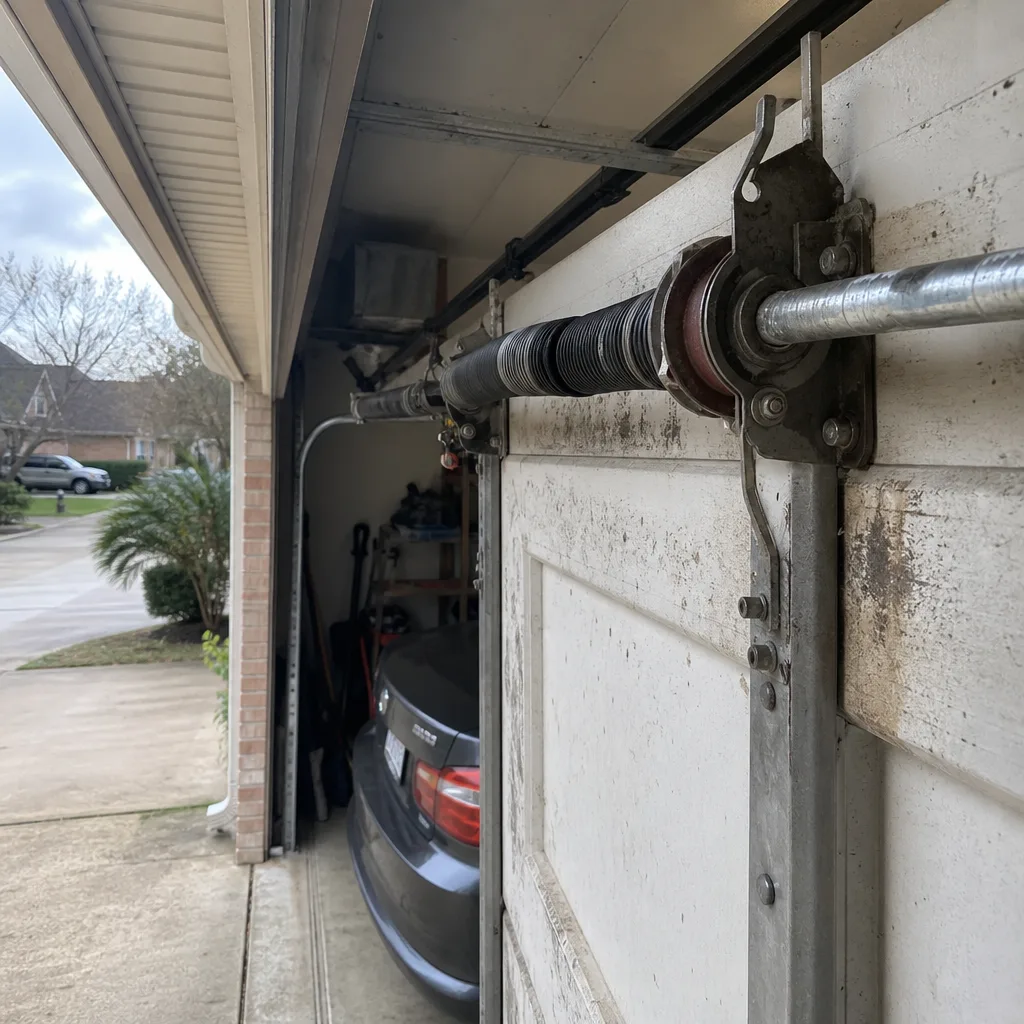
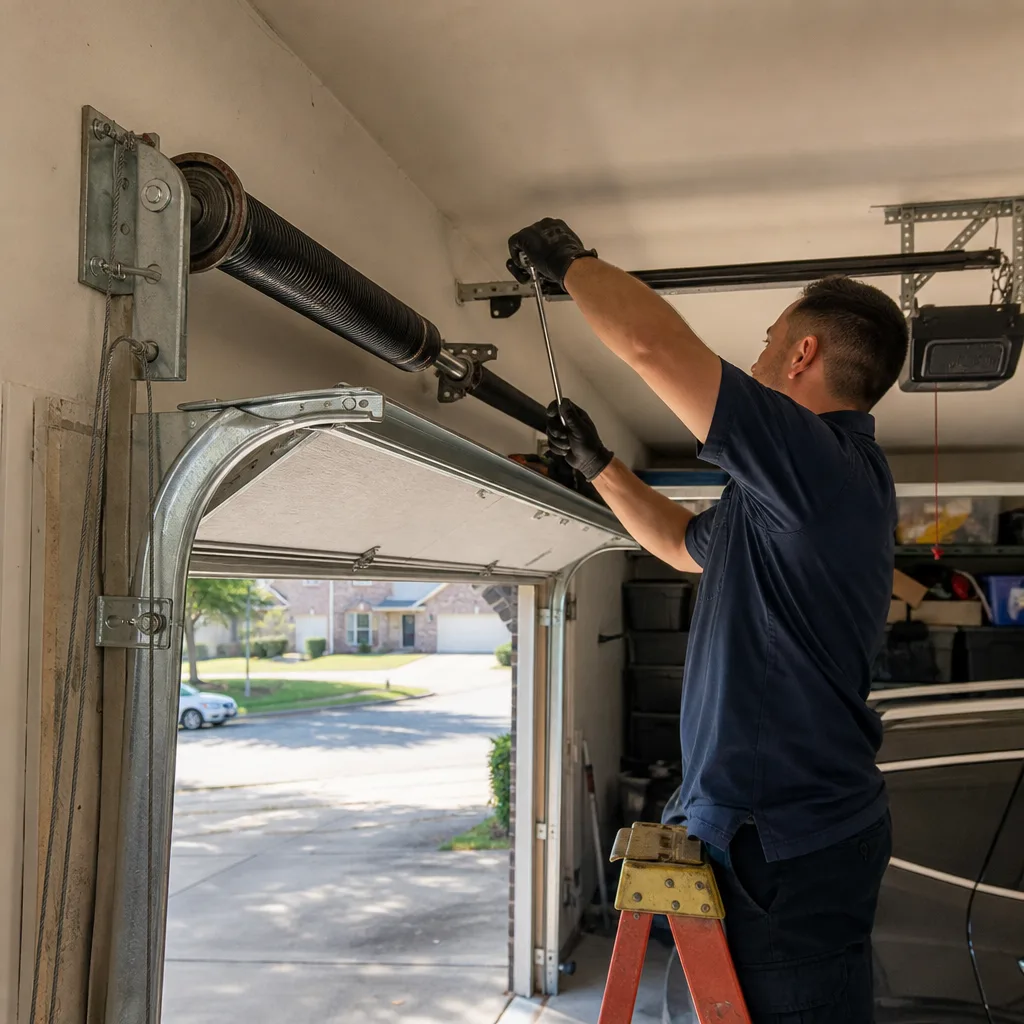
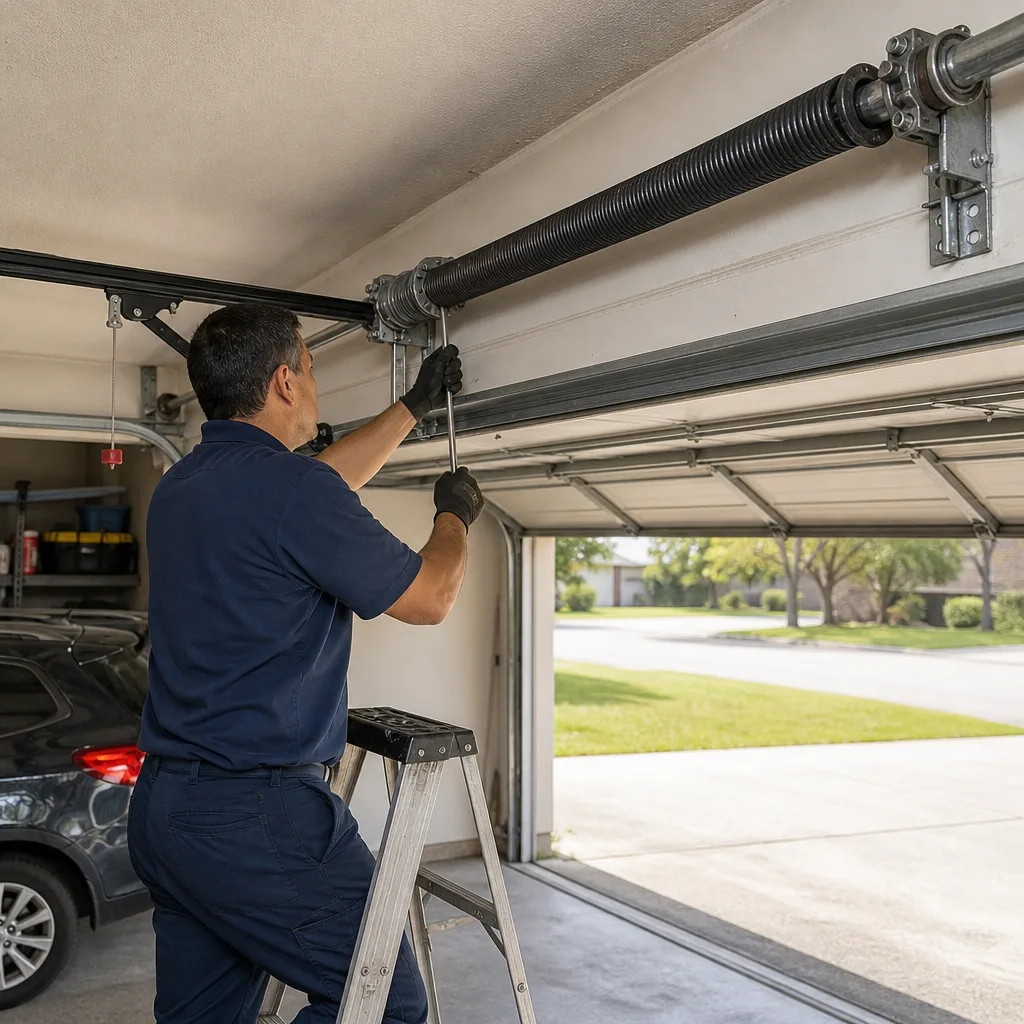
Stand on a step ladder, not directly beneath the spring but to the side, and look at the torsion spring. The coil gap should be even along its full length. If you see a wide spot or a visible crack or rust that looks deeper than surface patina, the spring is failing. In Houston’s humidity, surface rust on springs is normal. But a bulge or a visible crack is the end-of-life warning. Do not touch the spring. Do not attempt to adjust it. Torsion springs are under hundreds of pounds of tension and can cause serious injury or death if they release unexpectedly. This is a professional-only repair, full stop.
Check 4: The Cable Wear Check
The cables run along both sides of the door, from the bottom corners up to the spring assembly. They carry the spring’s tension to the door. Look for frayed strands, rust crusts, or any place where the cable looks pinched or kinked. A snapped cable in Houston tends to happen right after a spring lets go, but it can also fail on its own, especially on doors close to the Gulf where salt air accelerates corrosion. If you see any strand separation, call for garage door repair in Houston before the cable fails completely. A snapped cable under tension is dangerous.
What a Post-Tropical-Storm Inspection Must Cover
Houston’s maintenance calendar has a moment that no northern guide covers: the day after a tropical storm. Hurricane Harvey taught everyone in this city that water finds its way into places it shouldn’t. A garage door that survived the storm isn’t necessarily fine. It needs a specific inspection, and not just a quick visual once-over from across the driveway.
The post-storm inspection covers five areas:
- Track alignment: High-wind events can push a garage door sideways, bowing the vertical tracks or shifting the brackets that hold them to the wall. Run the door up and down. Listen for grinding, popping, or a stutter as the rollers pass through a particular spot. Look for a gap between the track and the wall bracket. Even a quarter-inch shift changes the roller path and wears out rollers within months.
- Bottom seal and weatherstripping: Storm water is different from rain water. It’s moving laterally, pushed by wind, carrying salt spray, silt, and the miscellaneous chemical runoff of a flooded city. Wood-frame doors with older seals are especially vulnerable. Check the perimeter seal on the sides and top, not just the bottom. Any place water got in, rust will follow.
- Rust bloom on hardware: In the days after a storm, any metal part that was wetted will begin to show rust. That includes hinges, bracket bolts, torsion spring, cables, and the opener rail. A light surface bloom can be wiped with a dry cloth and treated with silicone spray. Deep rust or any pitting on the cables means replacement is coming.
- Opener electronics: Check the photo-eye sensors at the bottom of the track. If floodwater reached them, they often look fine but fail intermittently. A sensor that works when dry and fails in the next rain is a classic post-storm pattern. Same with the wall button and the outdoor keypad. If the keypad acts sluggish, stop using it. Continued button mashing doesn’t improve a corroded circuit board.
- Debris in the track channels: Wind drives leaves, twigs, and roof granules into the track channels. Run a clean rag along the inside of both tracks. Remove anything that’s stuck. Don’t blow compressed air upward, that just pushes debris deeper. Wipe, don’t spray.
If the door was submerged, even partially, the opener motor and the torsion spring both need a professional inspection before you run the system. Water in a spring cone is invisible until the spring fails, and a waterlogged opener can run fine for weeks then short out or bind. The Kingswell standard on this is blunt: any flood-touched garage door gets a full professional inspection before it gets regular use again.
Opener Maintenance: Force Settings, Limit Switches, and Safety Sensors
The opener is the part most Houston homeowners ignore until it quits. But opener maintenance is where you catch the small adjustments that prevent the big failures. Most modern openers include a built-in force-sensing mechanism that reverses the door if it meets resistance. That mechanism works only if the door’s balance is close to correct and only if the force settings haven’t drifted. It also has a lifespan measured in cycles, and every year a Houston garage door goes through cycles faster than a four-season climate, because the door isn’t snowed in for four months. It’s used twelve months a year.
Three opener checks worth doing twice a year:
- Safety sensor alignment: The two photo-eyes near the bottom of the door should point directly at each other. If they’re misaligned, the door will start closing then reverse for no apparent reason. A small bracket bump from a trash can or a bike is enough to knock them out of line. Adjust gently until the indicator light on both sensors glows steady. If one sensor has no light at all, check the wiring before replacing the unit. In Houston’s humidity, sensor wire connections corrode faster than the sensors themselves fail.
- Limit switch calibration: The limit switch tells the opener where “closed” and “open” are. Over time, these drift. The door stops an inch short of the floor, or it reverses at the top before reaching full open. Adjust per your opener’s manual, which you can usually find online by model number. Chamberlain and LiftMaster openers have a slightly different procedure than Genie, but all three include downloadable manuals.
- Force setting confirmation: Close the door. Place a roll of paper towels flat on the floor under the door’s path. Close the door again. It should reverse within a second of contacting the roll. If it doesn’t, the force setting is too high and needs to be turned down. This is the test that protects kids, pets, and car bumpers. Do it after any spring replacement or track adjustment, because those changes shift the force the opener sees.
In Houston, we also see a specific seasonal opener issue every year: ants. Fire ants and crazy ants nest inside opener motor housings and wall buttons. The surge of ants after a wet spring is a real thing. If your opener runs erratically or the wall button feels warm, open the motor housing and clean out any ant detritus. This sounds like a joke. It isn’t. Ant colonies inside openers are a consistent pattern we see across Houston, from Pearland to Spring Branch.
Common Mistakes to Avoid
- Lubricating in January because a northern blog said so. January is the lowest-stress month for Houston garage doors. Lubricating then means the product sits for four months before the conditions that need it arrive. Do it in April, when the heat is about to stress everything.
- Using WD-40 as a lubricant. This is the most common maintenance error we see. It cleans, it doesn’t lubricate, and it washes away whatever lubrication was already there. It also attracts dust after it flashes off. Use silicone or white lithium instead.
- Replacing the bottom seal without checking the slab. If your concrete has settled unevenly, a new seal won’t fix the gap. You’ll spend money and still see daylight. Check the gap shape first, then decide what needs replacing.
- Ignoring a noisy door. A door that grinds, pops, or squeals is communicating something. In Houston’s humidity, the noise often means rust has built up in a hinge or roller. Running a noisy door for months turns a $25 hinge replacement into a $300 roller-and-track repair.
- Touching the torsion spring. No homeowner should attempt to adjust, repair, or “tighten” a torsion spring. The tension in that coil can kill. This is not an exaggeration and not a cautious legalism. It’s the single most dangerous component in a residential home.
- Testing the balance while the door is connected to the opener. If you run the half-open balance test without pulling the release cord, you’re testing the opener’s lock, not the spring. Pull the red cord first. Always.
- Skipping the post-storm check because the door still works. A garage door can survive a storm with a slightly bowed track and run fine for weeks before the wear becomes obvious. The door working today doesn’t prove it wasn’t damaged. Check it in the week after any tropical weather event.
When to Call a Professional
Most of the checklist above is homeowner-safe. But there are clear stop points. If the half-open balance test shows the door dropping or slamming, the springs need professional attention. If you see a crack or bulge in the torsion spring, do not touch the door. If a cable is frayed or rusted through any part of its thickness, call before it snaps. If the track is visibly bowed after a storm, realigning it requires tools and experience most homeowners don’t have and shouldn’t buy for one job. If the opener was submerged or the sensors failed the paper-towel reversal test, a professional diagnostic is worth the visit. Bramwell Garage Doors Houston offers free estimates across Houston, and every job starts with a written price before any work begins. Call (903) 989-4180 and a live person answers, even at 2 a.m. when a snapped spring has trapped your car inside.
Frequently Asked Questions
Twice a year is the right rhythm for Houston: once in April before summer heat, and once in October after hurricane season. For Garage Door Warning Signs: A Houston Homeowner’s Reference Guide, check our blog. A professional tune-up typically runs $75 to $150, and the April session is the more important of the two because it catches the heat-related failures before they happen. Call (903) 989-4180 for a free estimate on a full inspection.
The door will drop or slam during a balance test, or it will feel noticeably heavier when you lift it by hand. A visible gap in the coil, a bulge, or deep rust on the spring are all end-of-life signs. Springs typically last 7 to 12 years in Houston’s climate, but annual cycle count varies by household. If you see any of these, call for spring service before it snaps.
Maintenance won’t extend a spring’s cycle life, which is fixed by the steel and the number of times the door opens and closes. But maintenance does catch a weakening spring before it snaps, which means you can schedule a replacement on your terms instead of dealing with a 10 p.m. failure. Most torsion spring replacements in Houston run $150 to $280, parts and labor included, quoted before work starts.
Run the door and listen for grinding, popping, or stuttering. Look for a gap between the track and the wall. Check the bottom seal for water intrusion and the cables for rust that appeared after the storm. Any of these means the door took some impact and should be checked by a pro. Post-storm inspections are always worth doing, even if the door seems fine.
Yes. We service LiftMaster, Chamberlain, Genie, Raynor, Clopay, Amarr, Wayne Dalton, and Craftsman. The maintenance principles are the same across brands, but opener calibration and spring sizing vary by model, which is why we match the service to your specific door. Every repair is covered by the 365-Day Done Right Promise: if it fails within a year, we come back and fix it at no charge.
Most tune-ups in the Houston area run $75 to $150, depending on what’s included. A tune-up should cover spring inspection, lubrication, balance testing, safety sensor alignment, and opener force settings. We quote the exact price before work starts, in writing, so there are no surprises at the door. See How to Hire a Garage Door Contractor in Houston: A Step-by-Step Guide for what to expect. Call (903) 989-4180 for a free estimate.
The Bottom Line
Garage door maintenance in Houston isn’t the same as garage door maintenance in a four-season climate. The important months are April and October. The important products are silicone and PTFE sprays that don’t break down in heat. The important checks are the half-open balance test, the uneven bottom-gap inspection for slab movement, and the post-storm track and rust check after tropical weather. Most of this checklist takes under an hour and requires no special tools. The parts that require a professional, most notably the torsion spring and cables, are exactly the parts where a homeowner should never improvise. Stick to this calendar, use the right products, call for garage door installation or replacement in Houston when a door is beyond repair, and your door will outlast the Houston heat.
Written by Marcus Ellery, Owner at Bramwell Garage Doors Houston, serving Houston since 2001. Explore more guides & resources on our blog.
See the difference
 Before
 After
After Before
 After
After Before
 After
After