
Last updated October 16, 2026
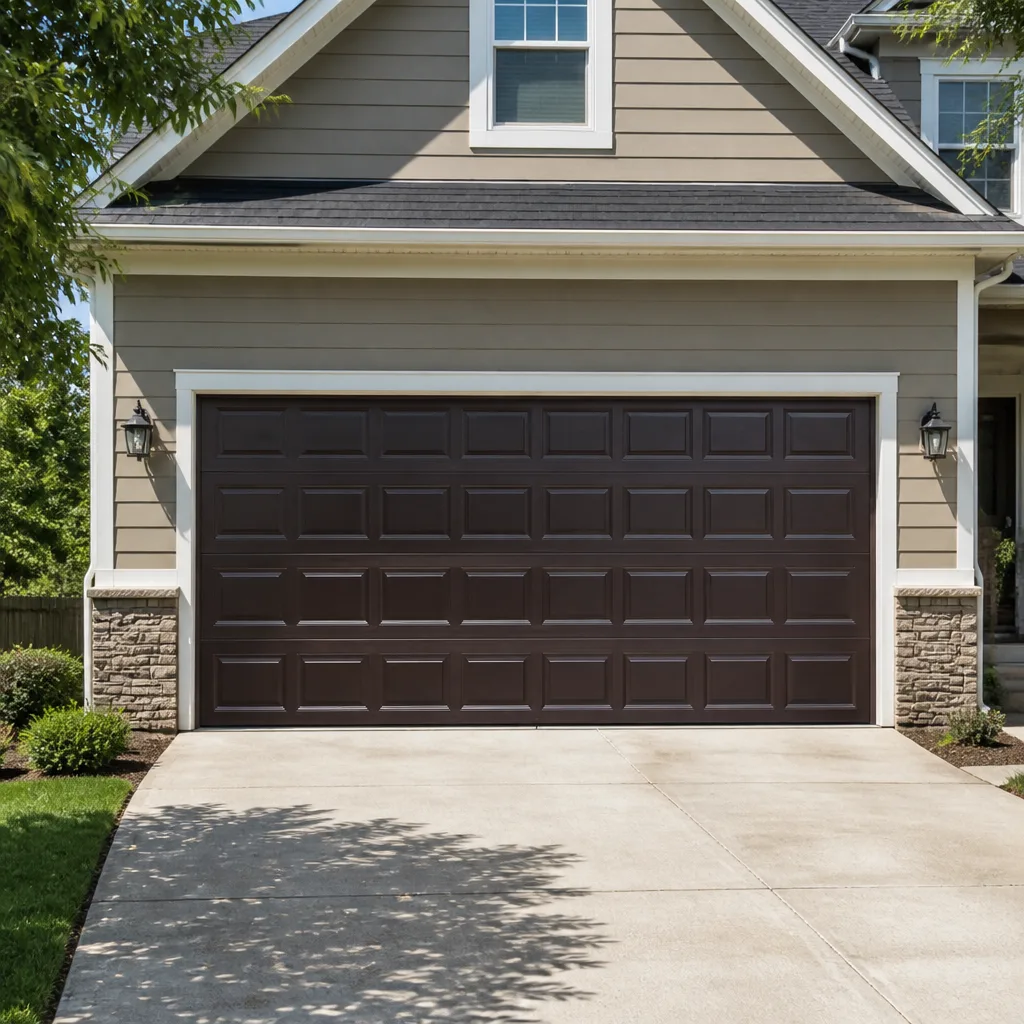 Raised-panel steel
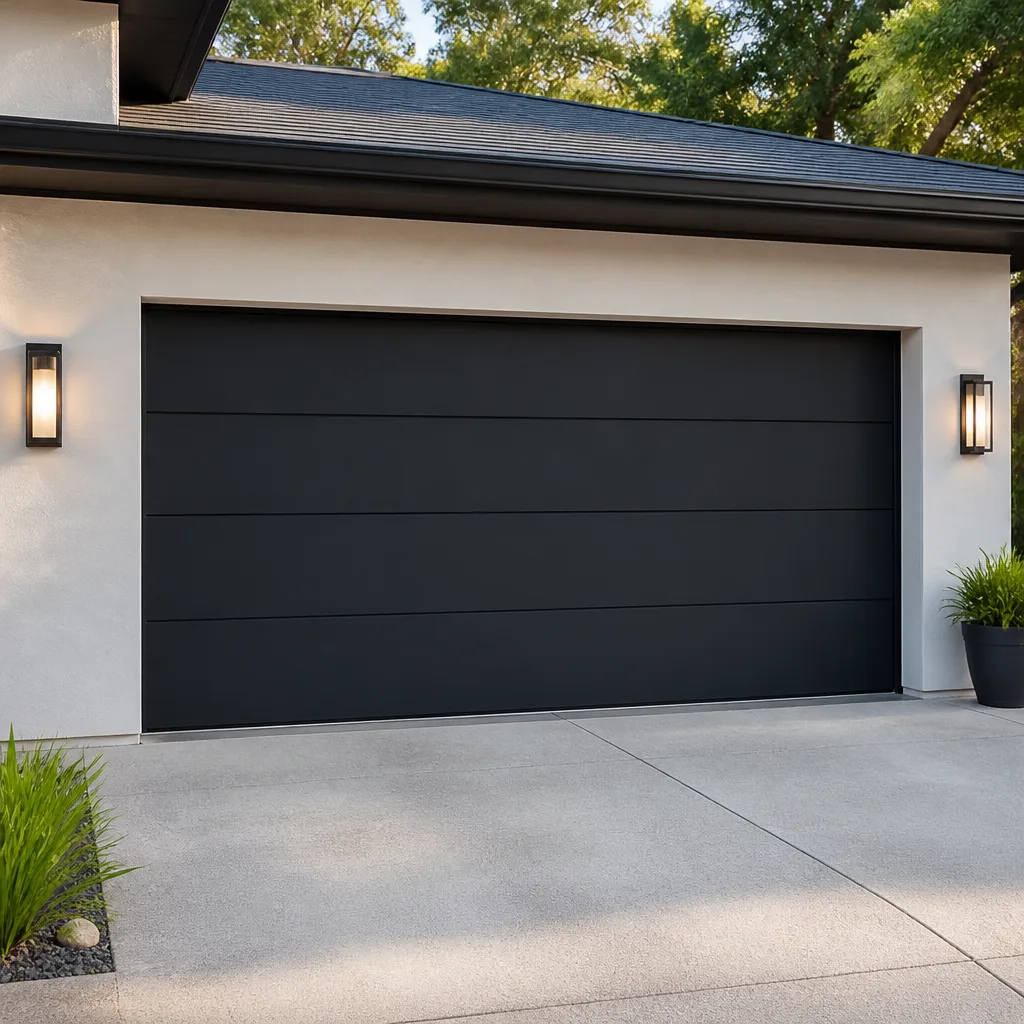 Modern flush
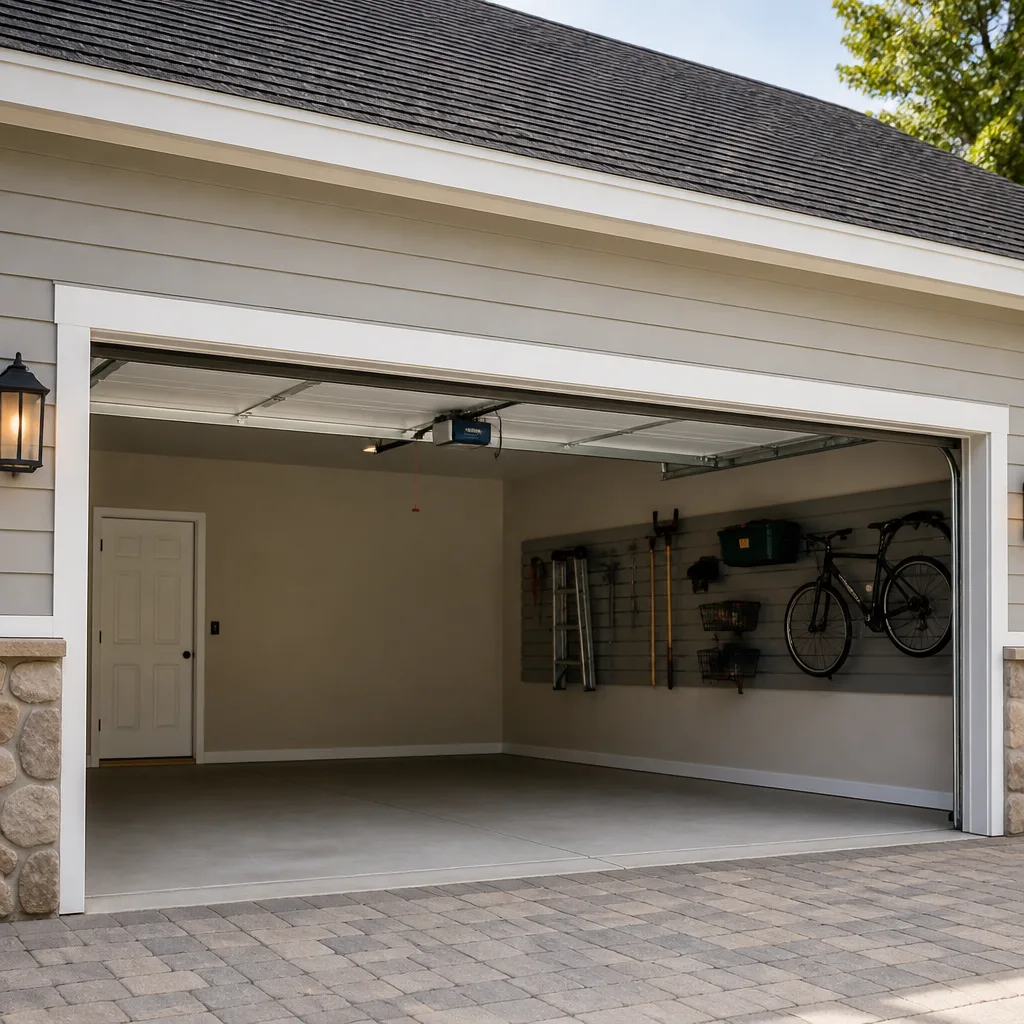 LiftMaster openers
Full 25-point door and opener safety check with every visit - springs, cables, rollers, tracks, and your LiftMaster or Chamberlain opener included
You get a price before we start. It does not change when the truck arrives.
Get your free estimateDIY vs Professional Garage Door: The Houston Homeowner’s Decision Guide
Here’s a number most Houston homeowners don’t expect: a single torsion spring on a standard double garage door holds roughly 100 to 150 pounds of stored torque even when the door is closed. Released incorrectly, that energy moves the winding cone fast enough to break bones in a fraction of a second. The DIY-versus-professional question for garage doors isn’t really about how handy you are. It’s about which tasks carry injury risk serious enough that no amount of YouTube preparation makes them appropriate for a homeowner, and which ones are genuinely straightforward with the right information. This guide draws that line clearly, without overselling either option. By the end, you’ll know exactly which repairs you can tackle this weekend, which ones to leave to a pro in Houston, and how to use what you learn here to spot a sloppy technician from across your driveway.
Styles & brands we work with
Quick Answer
Most garage door maintenance tasks, including lubrication, weather seal replacement, sensor realignment, and remote programming, are safe and realistic for a Houston homeowner with basic tools and an hour or two. Torsion spring replacement, cable replacement, and track realignment are not DIY work. Those components carry documented injury risk and require specialized tools and training. For anything involving springs or cables, call a professional garage door repair service in Houston. The cost is lower than an emergency room visit, and the work gets backed by a written guarantee. See our Garage Door Repair Maintenance Checklist for Houston Homeowners for the full list of safe DIY tasks.
Table of Contents
- What’s Actually Safe to DIY: A Complete List
- The Don’t-Touch List: Springs, Cables, and Track Work
- The Real Cost of DIY: Parts, Tools, and Redo Risk
- Houston-Specific Complications: Slab Movement and Humidity
- How DIY Knowledge Makes You a Better Customer
- Common Mistakes to Avoid
- When to Call a Professional
- Frequently Asked Questions
- The Bottom Line
What’s Actually Safe to DIY: A Complete List
These are the tasks our technicians get asked about most often, and the honest answer is that most of them are fine to do yourself. None involve stored tension, and none require tools beyond what a typical Houston garage already has tucked in a drawer. Here’s the full list, with realistic time estimates and what you’ll need.
Lubricating the Moving Parts
This is the single highest-value maintenance task on any garage door, and it’s completely safe. Use a white lithium grease on the hinges, rollers, and the torsion spring coil itself, and a silicone-based spray on the tracks. Avoid WD-40, which is a solvent more than a lubricant and will leave the moving parts drier than they started. Plan on 20 minutes twice a year. In Houston, the humidity means moving parts collect a sticky film faster than they do in drier climates, so spring and fall lubrication is a good rhythm.
Replacing the Weather Seal
The rubber strip along the bottom of the door takes a beating from Houston heat and moisture, and it’s very simple to replace. Measure the width of the door, buy a replacement seal from any hardware store for $15 to $30, pull the old one out of its groove, and slide the new one in. Some doors use a flat channel that holds the seal with a friction fit. Others use a u-shaped channel that needs the seal compressed at the ends. You can do this in 30 minutes. A torn seal is the most common way Houston garages get water, bugs, and that sticky summer air inside.
Realigning the Safety Sensors
The photo eye sensors on either side of the door track stop the door from closing on a car, a child, or a pet. If they’re knocked out of alignment, the door will refuse to close all the way, and the fix is usually just a gentle adjustment. Look for two small sensors about six inches off the garage floor. There’s a small light on each one. If one light is blinking or off, check that the sensors are pointing directly at each other and that nothing is blocking the beam. Loosen the wing nut, swivel the sensor until the light stays on, and tighten. Ten minutes, no tools required beyond a screwdriver.
Programming and Replacing Remotes
If your opener motor works but the remote doesn’t, you can usually fix the problem without touching anything mechanical. Chamberlain and Genie openers both have a learn button on the motor unit, and programming a new remote means pressing that button and then pressing the remote. A replacement remote is $20 to $35 online or at any big box store in Houston. If the wall button works but the remote doesn’t, the issue is usually the remote itself or the opener’s receiver, not the door mechanism.
Tightening Loose Hardware
Garage doors go up and down hundreds of times a week, and bolts work themselves loose. A socket set and 15 minutes spent going over the hinges, brackets, and track bolts is real preventive maintenance. The key rule: tight is good, but don’t wrench down on anything connected to the bottom fixture or the spring system. Those bolts have a specific torque, and overtightening them can crack a bracket or strip a thread. If you see red, blue, or green marks on the bolts, leave them alone. Those are torque marks from a previous professional installation, and they’re there to tell you where the bolt was set.
The Don’t-Touch List: Springs, Cables, and Track Work
This is where the line gets drawn, and we’re going to be direct about why. These components are not dangerous in the way a dull knife is dangerous. They’re dangerous in the way a loaded weapon is dangerous, because the energy stored in them is invisible until it releases.
Torsion Spring Replacement
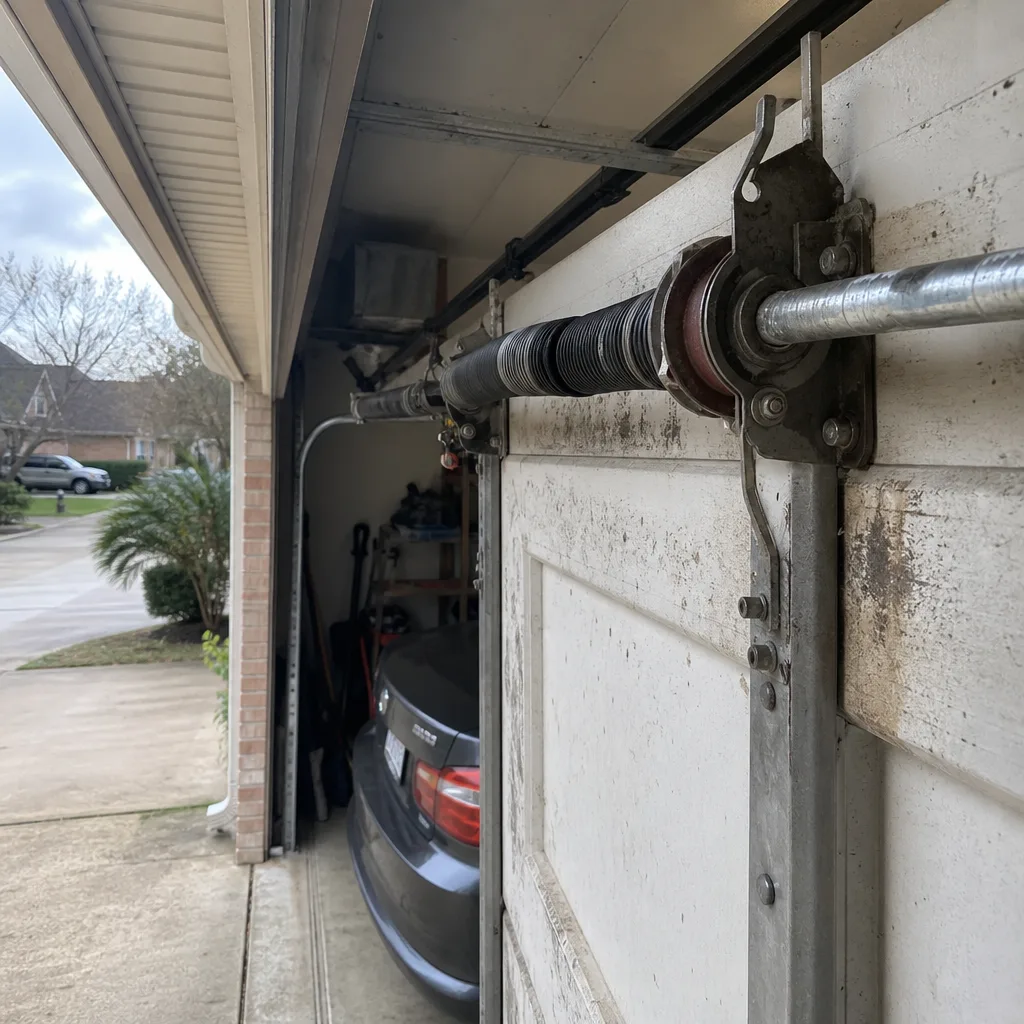
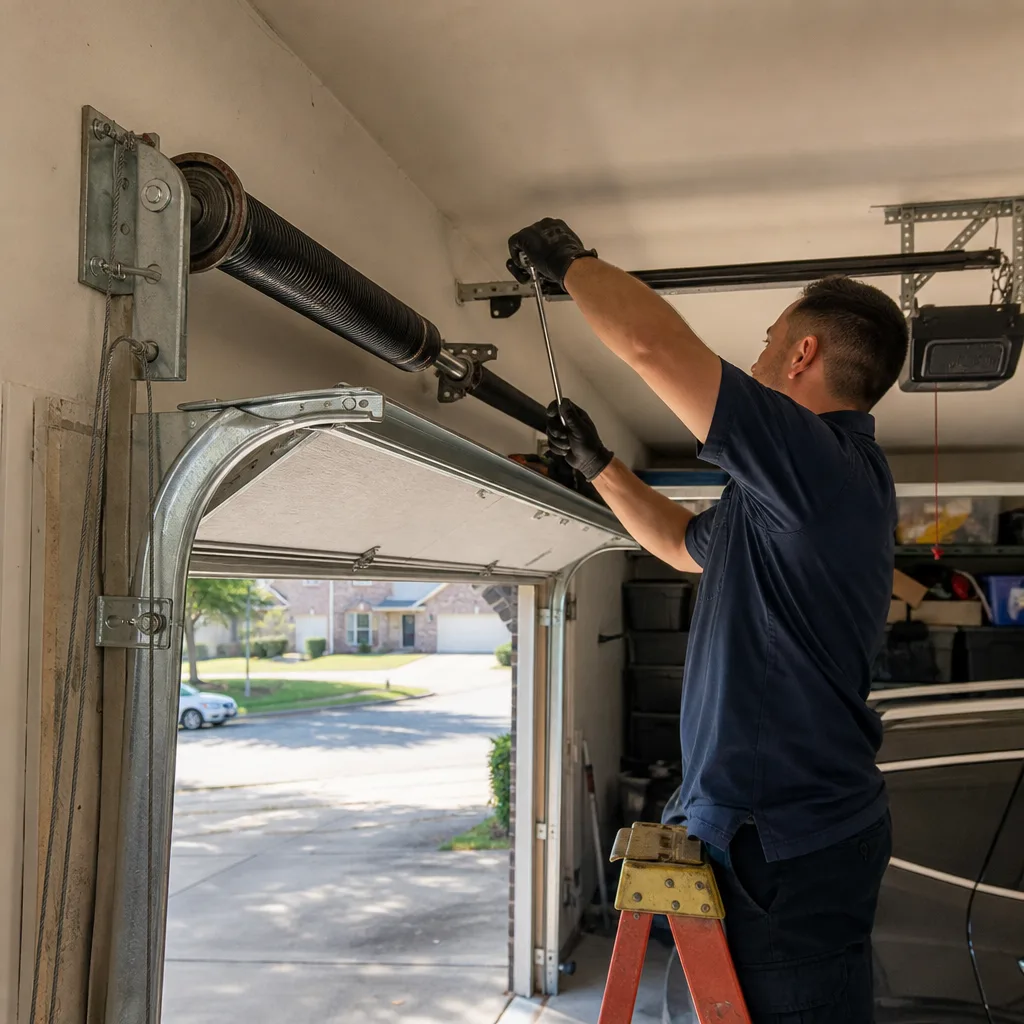
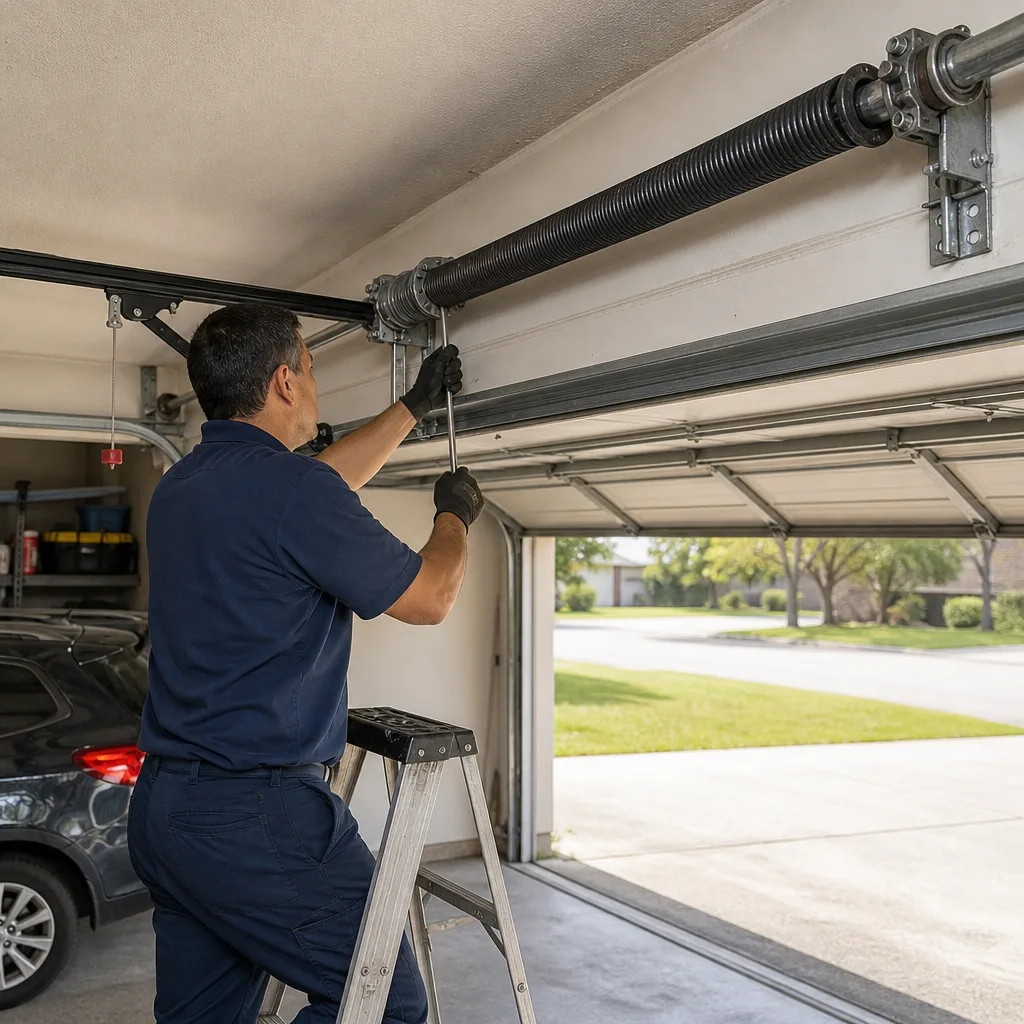
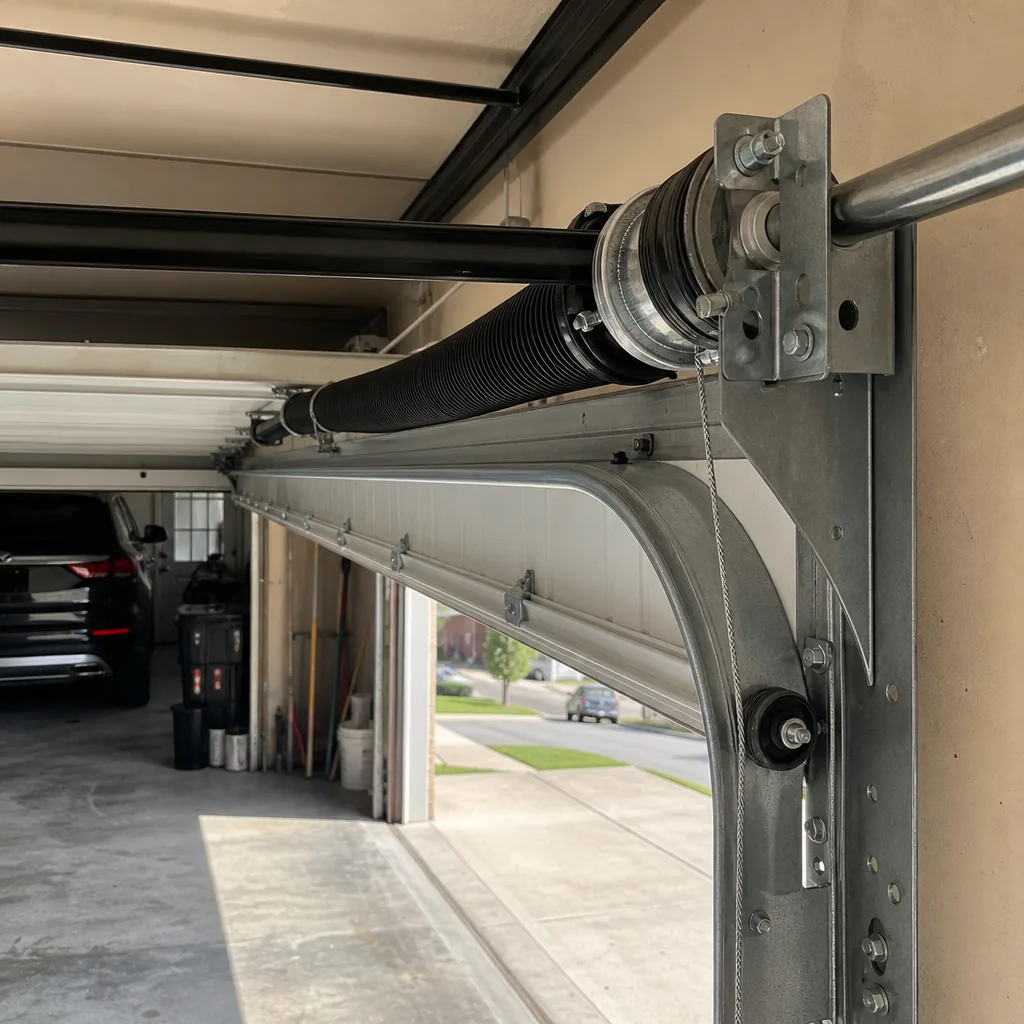
A torsion spring is the heavy coil mounted horizontally above the closed door, and it does most of the lifting work. When you open the door, the spring unwinds and transfers stored energy to the cables. When you close it, the spring winds back up and stores that energy again. The springs on a standard two-car garage door are wound to seven and a half to eight and a half turns, and at that tension, a single spring holds enough force to seriously injure or kill a person if the winding cone slips. The professional tools for this job are 18-inch steel winding bars made specifically for the size of the cone, and the process involves a specific sequence of quarter-turns while standing to the side of the spring, never in front of it. The mechanism of injury is specific: when a winding bar slips out of the cone, the spring unwinds instantly, and the bar becomes a projectile moving at highway speed. We’ve seen the aftermath in Houston garages. It is not worth the $150 to $280 you’d save by doing it yourself. A professional garage door spring repair in Houston includes the correct springs, the correct winding procedure, and a written guarantee that the work was done right.
Cable Replacement
The lift cables run from the bottom corners of the door up to the drums at the top, and they work together with the springs to move the weight of the door. The danger with cables is that they’re always under tension, and a frayed cable is a warning sign, not an invitation. When a cable snaps, the ends whip back with enough force to cut through skin and muscle. Replacing one requires unwinding the spring, disconnecting the old cable, running the new one through the pulleys and around the drum, and re-tensioning the entire system. If you get the cable length or the drum position wrong, the door can lift unevenly, which puts sideways stress on the tracks and the rollers and eventually bends the whole assembly. Our garage door repair service in Houston handles cable replacement as part of a full system inspection, because a snapped cable almost always means the spring or the drum was wearing out first.
Track Realignment
The vertical and horizontal tracks guide the door along its path, and if they get knocked out of alignment, the door can bind, shake, or come off the track entirely. The tracks are bolted to the wall and ceiling with brackets that can be adjusted, and there’s a temptation to grab a level and a socket set and straighten things out. The risk here is less about the track itself and more about what the track is attached to. The bottom brackets where the cables connect are called bottom fixtures, and they’re bolted to the door under the same cable tension we just described. A misaligned track is often the symptom of a deeper problem, a loose spring, a worn roller, a shifting slab, and if you realign the track without addressing the cause, the door will just knock itself out of alignment again, and you’ll be in the garage at midnight with a door stuck half open.
The Real Cost of DIY: Parts, Tools, and Redo Risk
The honest math on garage door DIY starts with the question, “What does the repair actually cost if I do it myself, and what happens if I do it wrong?” For a detailed breakdown, see our Garage Door Cost Breakdown: The Houston Homeowner’s Reference for 2026. For the safe tasks, DIY almost always wins. For the dangerous ones, DIY is almost always more expensive.
The Safe Task Math
Lubrication costs about $12 for a can of white lithium grease and a tube of silicone spray, and you’ll get multiple seasons out of both. Weather seal replacement is $15 to $30 for the seal itself. Sensor realignment is free if the sensor itself isn’t broken. Remote replacement is $20 to $35. Even with a tool purchase thrown in, like a socket set for the loose hardware pass, you’re under $50 total for all of it, and you’ll use the tools again. There’s no realistic scenario where calling a professional for these tasks saves money, and there’s no scenario where doing them yourself puts you in danger if you follow the basic rules.
The Dangerous Task Math
Torsion springs for a standard door cost $50 to $90 each if you can find the right size online, which is harder than it sounds because spring sizing is based on door weight, height, track radius, and drum size, not just the number stamped on the old spring. The winding bars cost $20 to $40. If you get everything right on the first try, you’re at $70 to $130 and two to three hours of careful work. A professional spring replacement in Houston runs $150 to $280, parts and labor included. The difference is $80 to $150. Now factor in the redo risk. A 180-degree error on the winding direction, a spring that’s a quarter inch too long, a cone that was overtightened and strips the set screw, any of these means the door doesn’t work, and you’ve spent the money and the afternoon for nothing. And that’s the best case. The worst case is an emergency department bill and a garage door that still needs a professional. In our experience at Bramwell Garage Doors Houston, the homeowners who call after a DIY spring attempt are the ones who tell us they wish they’d made the call first.
Tools You’d Buy But Never Use Again
Winding bars have exactly one use: installing and removing torsion springs. If you’re not in the garage door trade, that’s a $30 purchase for a single job. A cable drawdown tool is another $20. If you’re buying these tools to save $100 on a professional repair, the math only works if the repair goes perfectly, which it rarely does for someone doing it the first time. And for Houston homeowners specifically, there’s a hidden variable that makes spring and cable work even less forgiving.
Houston-Specific Complications: Slab Movement and Humidity
Garage door repair is often taught in YouTube videos filmed in Arizona or California, where the ground is stable and the air is dry. Houston is neither of those things, and the difference matters.
Slab Movement
Houston sits on expansive clay soil that swells when it’s wet and shrinks when it’s dry. Over time, this movement cracks and shifts concrete slabs, including the slab your garage door sits on. When the slab shifts, the door frame shifts with it, which knocks the tracks out of square, which throws off the cable tension, which wears the springs unevenly, which leads to a door that opens halfway, binds, or refuses to stay closed. This is a Houston-specific problem, and it means that tasks that are straightforward in stable-climate markets are compounded here. Before attempting any structural work, check our guide to Garage Door Permits, Codes & Inspections in TX: What You Need to Know. A track realignment that would be a 30-minute job in Phoenix might require adjusting the door’s end bearings, shimming the tracks, and resetting the cable drums just to get the door square again. It’s not that Houston techs are doing anything exotic. It’s that Houston garages are almost always fighting the ground underneath them.
Humidity and Hardware
Houston humidity accelerates corrosion on every metal part of the door. Rollers, hinges, brackets, spring coils, and cable strands all rust faster here than they would in Dallas or Austin, let alone in the desert. What that means for DIY work is a shorter window between maintenance intervals, and a higher failure rate on parts that would be fine for years elsewhere. A garage door spring in Houston lasts 7 to 10 years under normal use. In a drier climate it might go 12. This acceleration is why we recommend lubrication twice a year instead of once, and why catching a rust spot early matters more here. A rusted cable strand is a weakened cable, and a weakened cable fails under tension.
What This Means for the DIY Decision
If you’re in Houston and you’re deciding whether to tackle a repair yourself, the question isn’t just “Can I do this?” It’s “Can I do this right on a door that has been fighting Houston clay and Houston humidity for ten years?” The safe tasks on the list above are still safe. Lubricating a rusty hinge is no more dangerous than lubricating a clean one. But the borderline tasks, the ones that would be fine in a stable climate, get pushed firmly into the professional column here. Track work on a slab-shifted Houston garage is not a beginner’s job.
How DIY Knowledge Makes You a Better Customer
Here’s where the guide takes a turn, because the real value of learning this stuff isn’t always about saving money on repairs you do yourself. For more guides & resources on protecting yourself as a customer, keep reading. It’s about knowing enough to hold a professional to a standard when you’re paying them. And in Houston, where the garage door market is crowded and the quality range is wide, an informed customer is a protected customer.
What to Verify on Any Technician’s Work
When a professional replaces your springs, you should know enough to check their work against a short list. First, the springs should be the same on both sides if you have a two-spring system, meaning the same wire size, the same diameter, and the same length. Mismatched springs are a shortcut that leads to uneven lifting and premature failure. Second, the technician should balance the door before they leave, which means disconnecting the opener and lifting the door manually to check that it stays put at the halfway point. If the door drifts up or falls, the spring tension is wrong. Third, the winding cones should be set with the set screws tightened firmly, not just finger-tight. Fourth, the work should come with a written guarantee that names the parts replaced and the coverage period. If a technician in Houston balks at putting the guarantee in writing, that’s your signal to find a different technician.
The Questions That Separate Pros From Pretenders
You don’t need to be a technician to ask good questions. Ask about the door’s cycle life, which is how many open-and-close cycles the springs are rated for, and whether the tech measured your door weight before selecting springs. Ask whether they’ll be reusing the old drums or installing new ones, and why. Ask what the total price is before they start, and whether that price changes if the job takes longer than expected. Ask whether the technician is background-checked and whether the company answers its phone at night. None of these questions require technical knowledge. They require only that you know what a complete job looks like, and now you do.
Marcus Ellery, who runs Bramwell Garage Doors Houston, tells his technicians to expect these questions. “The customers who ask them are the ones who’ve been burned, and they’re the ones we want. We can answer every one of those questions without a pause.”
The Kingswell Standard for Houston Homeowners
When we show up at a Houston home, we run the job by the Kingswell Way, which means five things: say the price before the work starts, show up in the window we promised, leave the job site cleaner than we found it, put the guarantee in writing, and come back if the repair fails. Every Bramwell location is independently owned and operated, but each one has agreed to work to the full Kingswell standard, and that standard has been in place since 2001. The written price is the one that matters most to homeowners who’ve had a quote change at the door. We quote a number, you agree to it, and that’s the number on the invoice. Not a dollar more. The 365-Day Done Right Promise is the second one that matters. If a covered repair fails within the guarantee period, we come back and fix it at no charge. That commitment is in writing, not just spoken at the door, and it’s the same promise at every Bramwell location, including ours here in Houston.
Common Mistakes to Avoid
- Using WD-40 on the springs or hinges. WD-40 is a solvent, not a long-term lubricant. It cleans off the old protective film and then evaporates, leaving the metal drier than before. Use white lithium grease on metal-to-metal contact points.
- Loosening the red-painted bolts. The color on a torsion spring set screw or a bottom fixture bolt is a torque indicator from the last installation. If you loosen it, you may not have the tools or the knowledge to re-set it to the correct tension, and you’ll be calling a pro for a problem you created.
- Replacing one spring on a two-spring door. Springs wear at roughly the same rate. If one has failed, the other is close behind it. Replacing just the broken one means the door is unbalanced, and you’ll be paying for a second service visit within months. Professionals replace both springs as a set.
- Ignoring a door that’s slowing down. A garage door opener that’s working harder than it used to is usually a sign that the springs are losing tension. The opener was never designed to lift the full weight of the door, and running it that way burns out the motor and strips the gears. Address the spring issue before you’re replacing the opener too.
- Buying springs without knowing the door weight. Spring sizing is based on door weight, door height, track radius, and drum model, not on the spring length alone. Pulling a “similar” spring from a Houston hardware store usually results in a door that’s over-tensioned or under-tensioned, and both conditions cause problems.
- Disconnecting the opener without bracing the door. If you disconnect the opener to work on the door and the spring system is weakened, the door can come down fast. A door that weighs 150 to 200 pounds becomes a serious hazard in a free fall. Block the door or brace the tracks before you disconnect anything.
- Assuming a noisy door just needs oil. A grinding or popping noise can be a cable fraying, a roller bearing failing, or a spring binding. Lubrication may quiet the symptom for a few days while the underlying problem gets worse. If lubrication doesn’t silence the noise within a day or two, get it looked at.
When to Call a Professional
Call a professional if the repair involves torsion springs, lift cables, bottom fixtures, or track realignment. Also call if you’ve attempted a safe repair and the problem persists, because a door that won’t close, won’t balance, or makes a new noise after you’ve fixed the obvious issue is telling you something. A garage door that’s stuck open is a security problem and an invitation to Houston humidity, and a door that’s stuck closed traps your car inside. Bramwell Garage Doors Houston offers free estimates in Houston, and a live person answers the phone at (903) 989-4180 24 hours a day, including nights, weekends, and holidays. When you call, you’ll get a straight answer about what the repair likely involves and what it likely costs, and the written price you hear is the written price you’ll pay.
Frequently Asked Questions
No. The torsion springs above your garage door store 100 to 150 pounds of rotational force each, and when that force releases accidentally, it can turn a winding bar into a projectile moving fast enough to cause serious injury or death. Professional technicians train specifically to manage this force, and in Houston, a professional spring replacement typically costs $150 to $280, parts and labor included. Call (903) 989-4180 for an exact quote.
Most torsion-spring replacements run $150 to $280, parts and labor included, which covers both springs on a standard two-car door. The price varies by door weight, spring size, and whether the cables or drums also need attention. At Bramwell Garage Doors Houston, the price is quoted and agreed to in writing before any work starts.
You can safely handle lubrication, weather seal replacement, safety sensor realignment, remote programming, and tightening loose hardware. None of these tasks involve stored tension, and all of them can be completed with basic tools in under an hour. Avoid any repair that touches the springs, cables, or bottom fixtures.
Houston sits on expansive clay soil that swells and shrinks with moisture, which shifts concrete slabs over time. A shifted slab knocks the door frame and tracks out of square, which puts uneven stress on the cables and springs. Houston humidity also accelerates rust on metal components, shortening the lifespan of rollers, cables, and springs compared to drier climates.
Not with Bramwell Garage Doors Houston. We quote a written price before any work starts, and the number on the invoice matches the number you heard. That’s one of the four Kingswell standards, and it applies to every job at every Bramwell location. If the technician finds something unexpected, you’ll hear about it and agree to a new written price before anything additional happens.
Yes. Every repair comes with the 365-Day Done Right Promise, which means if the covered repair fails within the guarantee period, we come back and fix it at no charge. The guarantee is in writing, and the technician can tell you exactly what it covers and for how long before the work begins.
In most cases, yes. Spring and cable failures are common in Houston, and our technicians carry the parts on the truck. A live person answers the phone at (903) 989-4180 24 hours a day, and same-day service is usually available. Call and tell us what’s happening, and we’ll give you a real arrival window before we hang up. Estimates are free.
We service and repair all major opener brands, including Chamberlain, Genie, LiftMaster, and Craftsman, as well as doors from Clopay, Amarr, Wayne Dalton, and Raynor. If your opener is making noise or the door is moving unevenly, the issue is more often the springs than the opener itself, and we’ll diagnose it accurately before recommending any repair.
The Bottom Line
The DIY-versus-professional decision for garage doors comes down to one factor: stored tension. If the part you’re touching stores energy, like a spring or a cable, leave it to someone who manages that energy professionally. If the task is about cleaning, adjusting, or swapping out a component that doesn’t fight back, you can do it yourself with basic tools and a little patience. In Houston, that line is slightly more conservative than in other places, because slab movement and humidity make even straightforward work less predictable. Use the DIY knowledge you’ve gained here to maintain your door between professional visits, to ask better questions when you call a technician, and to hold that technician to a written standard. When the job calls for a professional, call (903) 989-4180 for a free estimate. Bramwell Garage Doors Houston has been working to the Kingswell standard since 2001: a written price before any work starts, a real arrival window, a clean job site, and a written guarantee on every repair. And if you’re looking for a new door rather than a repair, our garage door installation service in Houston follows the same standard.
Written by Marcus Ellery, Owner at Bramwell Garage Doors Houston, serving Houston since 2001.
See the difference
 Before
 After
After Before
 After
After Before
 After
After