
Last updated October 16, 2026
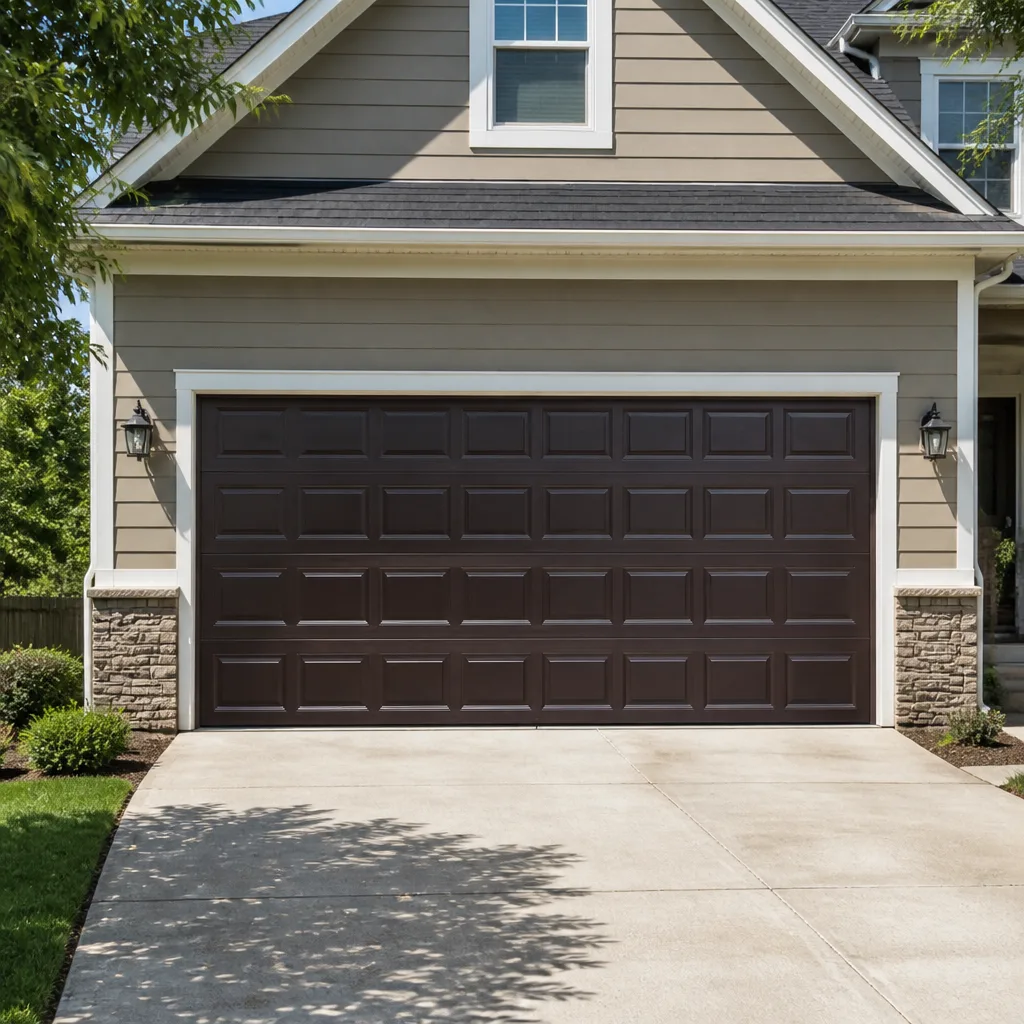 Raised-panel steel
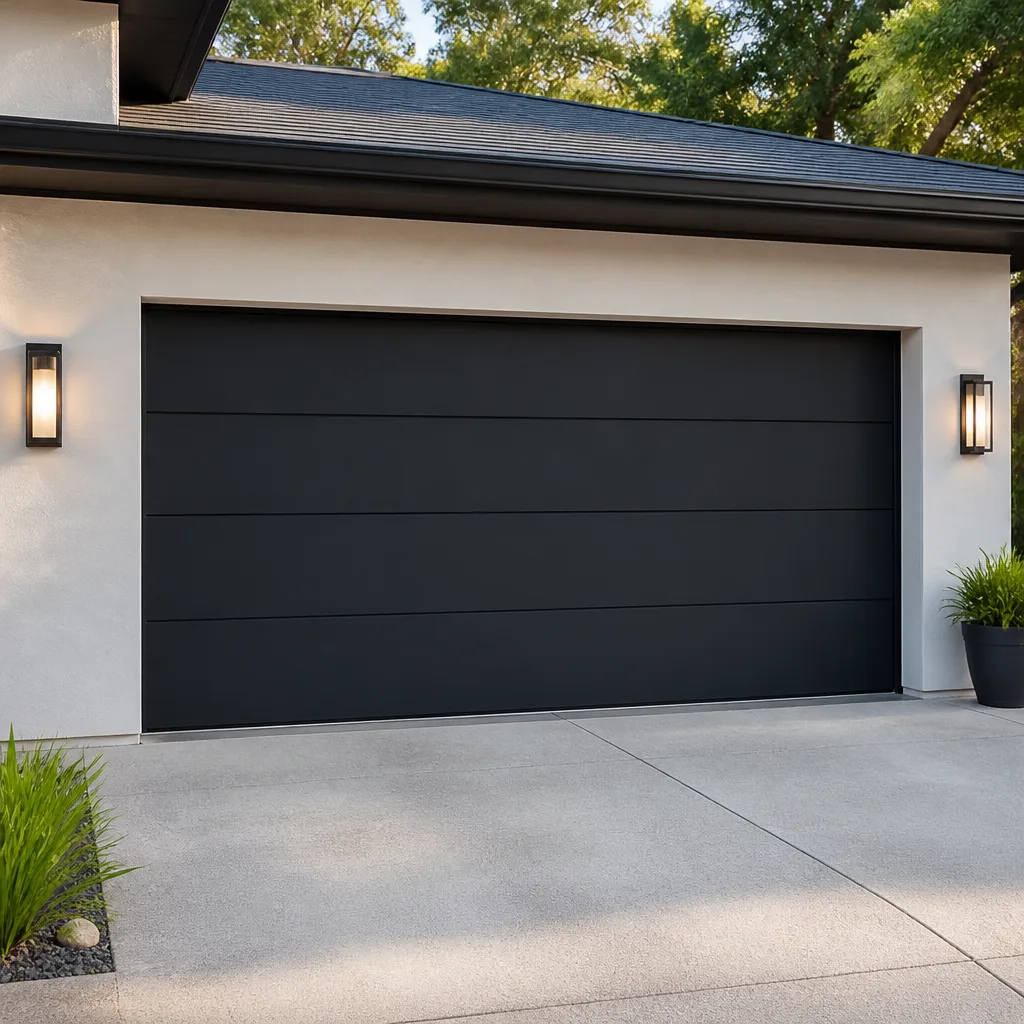 Modern flush
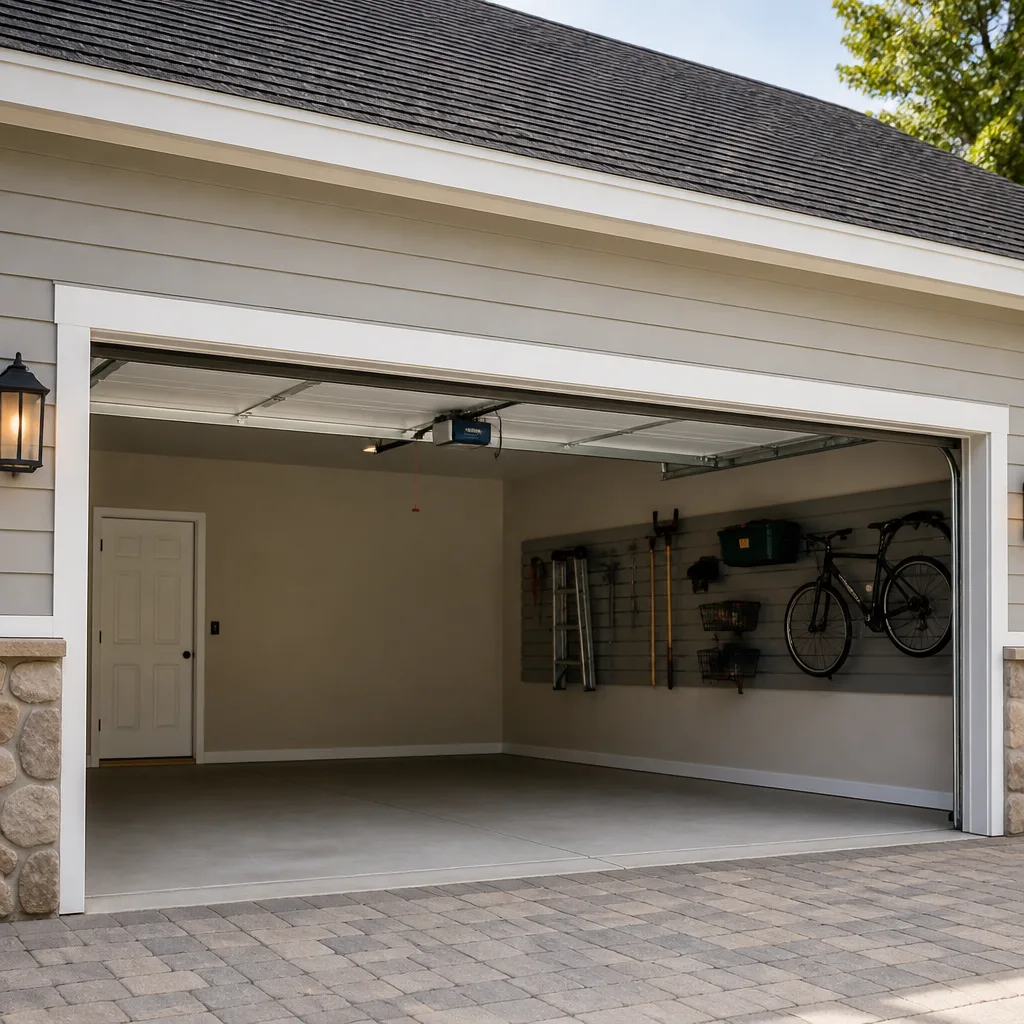 LiftMaster openers
Full 25-point door and opener safety check with every visit - springs, cables, rollers, tracks, and your LiftMaster or Chamberlain opener included
You get a price before we start. It does not change when the truck arrives.
Get your free estimateThe Complete Guide to Garage Door in Houston
Houston’s expansive clay soil shifts enough each season to pull a garage door frame out of square, a problem almost never mentioned in national garage door guides but one of the top reasons Houston doors fall out of alignment within a year of installation. If you’ve ever noticed your door binding on one side in August, or a gap at the bottom corner that wasn’t there in March, the ground beneath your slab is doing more work against your garage door than the opener ever does for it. This guide explains why Houston doors fail the way they do, what repairs actually cost here, which materials survive the Gulf Coast, and how to read your own door’s age and wear before a small problem becomes a Saturday-morning emergency. We’ve organized every section around the conditions we see in Houston homes, not a generic national playbook, and you can find more guides & resources on our site.
Quick Answer
A garage door in Houston is a system of panels, tracks, springs, and an opener that has to perform in a climate of high humidity, intense UV exposure, and shifting clay soil, which means the most common local failures are spring fatigue, track misalignment, and rusted hardware. Most Houston homeowners will pay between $150 and $280 for a torsion spring replacement, $350 to $900 for a new opener installed, and $1,200 to $4,500 for a full door replacement depending on size and material. The single most important thing you can do before any repair or installation is get a written price, and this guide will show you exactly what to ask for. For help deciding whether to tackle a project yourself, see our DIY vs Professional Garage Door: The Houston Homeowner’s Decision Guide.
Styles & brands we work with
Table of Contents
- Why Houston’s Climate and Soil Are Harder on Garage Doors
- Best Garage Door Materials for the Gulf Coast
- Real Houston Repair Costs: Springs, Openers, Tracks, and More
- What a New Garage Door Costs in Houston
- How to Read Your Door’s Age and Wear Patterns
- Seasonal Maintenance That Actually Prevents Failures
- Understanding the Dangerous Parts (Before You Touch Anything)
- Houston Garage Door Glossary: Trade Terms in Plain Language
Why Houston’s Climate and Soil Are Harder on Garage Doors
Houston sits on a band of expansive clay soil that geologists call the Beaumont and Montgomery formations. This soil absorbs water during the spring rains and swells, then shrinks during the hot, dry stretches of July and August. The movement isn’t huge, just a fraction of an inch per season, but it’s enough to shift a concrete slab and pull a garage door frame out of square. When the frame moves even a quarter inch, the steel track that guides the door up and down is no longer perfectly vertical. The door starts to bind on one side, the rollers wear unevenly, and the opener motor works harder than it was designed to.
We see this pattern constantly in neighborhoods like Meyerland, Kashmere Gardens, and older sections of Spring Branch, where slabs are older and soil movement has had decades to work. The symptom is usually a door that runs fine for years, then suddenly starts grinding or hesitating after a wet spring followed by a dry August. The fix isn’t always a new door. Often it’s re-anchoring the track to the shifted frame and re-squaring the opening, but it takes a technician who understands Houston soil movement rather than someone reading from a national training manual.
The humidity adds a second layer of trouble. Houston averages over 75 percent relative humidity year-round, and salt air works its way inland from Galveston Bay. Steel hardware that would last twenty years in Dallas or San Antonio starts showing rust in Houston inside eight to ten, especially on the bottom brackets, hinge pins, and the bolts that anchor the track to the wall. Rust on a hinge pin means the hinge doesn’t fold smoothly, which makes the door jerk and stress the panels. That’s the cycle we see: soil movement stresses the frame, humidity rusts the hardware, and the combination shortens the life of an average door by several years compared to inland Texas markets.
UV exposure is the third factor. A west-facing garage door in Houston bakes in direct afternoon sun for six hours a day, five months a year. That heat cycles the steel on the outside surface to 140 degrees or more, then the door cools to 85 overnight. The expansion and contraction eventually breaks down the adhesive bond between the steel skin and the interior insulation, and faded paint isn’t just cosmetic. It means the protective coating has degraded and the metal is exposed to moisture. Understanding these three forces, soil movement, humidity, and sun, is the foundation for every decision you’ll make about your door, from what material to choose to how often to service the springs.
Best Garage Door Materials for the Gulf Coast
If you’re replacing a door in Houston, the material decision matters more than anywhere else in Texas, because three materials perform very differently under Gulf Coast conditions. Steel is the most common choice and works well when it’s painted and maintained, but the gauge of the steel matters more than the brand. A 24-gauge or 25-gauge steel panel is a solid choice for most Houston homes; a 27-gauge panel, common in budget models, dents more easily and shows rust sooner in this humidity. Look for doors with a corrosion-resistant galvanized base layer under the paint rather than bare steel.
Aluminum doors hold up well against rust, which makes them attractive for homes in Pasadena, La Porte, and other areas closer to the bay. The trade-off is that aluminum dents more easily than steel, and Houston gets hail. If you’re near the ship channel with more salt exposure, aluminum makes sense. If you’re further north in Cypress or Spring where hail is more common, galvanized steel is the more practical choice. Fiberglass is another honest option for Houston heat because it doesn’t conduct heat the way metal does, so the interior of an attached garage stays a few degrees cooler in August. The material is light, resists corrosion, and holds up to humidity, though it can fade faster than painted steel if you don’t choose a UV-stabilized finish.
Whatever material you choose, the manufacturer’s warranty has a hidden requirement that Houston homeowners should know about. Most major brands, including Amarr and Wayne Dalton, require the door to be installed by a qualified technician to keep the warranty valid, and some rust-through warranties exclude coastal areas. If you’re in a ZIP code east of the Sam Houston Tollway, read the fine print. A door that claims a twenty-year rust-through warranty may reduce that to five or ten years depending on proximity to salt water. Ask about it before you pay, not after a rust spot appears.
Our experience in Houston points to this practical default: a 24-gauge galvanized steel door, with a polyurethane-insulated core and a factory-applied multi-layer paint finish, installed by a technician who understands Houston leveling. That combination handles the heat, moisture, and soil movement better than most alternatives. It’s what we’d put on our own houses if we lived in Kingwood or Pearland tomorrow.
Real Houston Repair Costs: Springs, Openers, Tracks, and More
The national garage door repair averages you see online rarely match what Houston homeowners actually pay, because local labor rates, parts availability, and soil-related callbacks all pull prices in different directions. For a detailed look at what drives these numbers, see our Garage Door Cost Breakdown: The Houston Homeowner’s Reference for 2026. Here are the real ranges we see on the ground in Houston, with the caveat that every house is different and your exact price should always be quoted in writing before work begins.
Most torsion spring replacements run $150 to $280, parts and labor included. Torsion springs, the heavy coils mounted above the door that handle most of the lifting weight, are rated by cycle life, and most original springs installed on Houston homes are 10,000-cycle springs, which fail every seven to ten years under normal use. When you replace a spring, ask for a higher cycle count. For a small additional cost, often $30 to $50 per spring, you can get springs rated for 20,000 cycles or more, which is the difference between doing this again in eight years versus fifteen or more.
Garage door opener replacement on a standard two-car door typically runs $350 to $900 depending on the opener type. A chain-drive opener from Chamberlain or Genie sits at the lower end, while a belt-drive unit, which is meaningfully quieter if you have a bedroom above the garage, costs a bit more. The opener motor itself is only part of that price; labor, new safety sensors, and disposal of the old unit are included in the range. If you’re in a pre-1993 house and the opener has no safety reversing sensors, budget for the full replacement rather than trying to repair an obsolete unit.
Track realignment or re-squaring, which is what Houston doors often need after a wet spring and dry summer, usually costs $125 to $300 depending on how far the door has moved out of alignment. Roller replacement, often needed at the same time because the rollers have been wearing against a skewed track, adds $90 to $180 for a full set. Bottom seal replacement, one of the cheapest and most important maintenance items for keeping humidity and floodwater out of a Houston garage, costs $35 to $90 installed, and we see that seal degraded on a majority of Houston doors we inspect simply because the rubber gets brittle in the heat.
| Repair | Typical Cost Range (Parts & Labor) | When Houston Homeowners Need It |
|---|---|---|
| Torsion spring replacement | $150 – $280 | Every 7 – 10 years; springs snap from fatigue |
| Opener replacement | $350 – $900 | Motor failure or house pre-1993 without sensors |
| Track realignment | $125 – $300 | After seasonal soil movement pulls frame out of square |
| Roller replacement (full set) | $90 – $180 | Usually at same time as track realignment |
| Bottom seal replacement | $35 – $90 | Seal brittle from heat; gaps let water in |
| Cable replacement | $90 – $150 | Frayed cables from rust or misalignment |
One Houston-specific cost note: flood exposure. If your garage has taken water, even a few inches during a hurricane season storm surge or a Memorial Day flood event, the bottom panels, rollers, and lower hinges may have absorbed silt and begun rusting from the inside. That damage often isn’t visible until a spring breaks or a panel splits months later. Before any repair on a previously flooded door, the technician should inspect the entire track system, not just the failed part.
Every one of these prices should be given to you as a written quote before the work starts. That’s not a courtesy; it’s the difference between a company that stands behind its number and one that changes it at your doorstep. Learn more about what to expect from a service call on our Garage Door Repair in Houston page.
What a New Garage Door Costs in Houston
A full garage door replacement in Houston costs more than the national average for one simple reason: Houston houses have wider garages. The standard suburban two-car garage here is 16 feet wide, while older homes inside the Loop often have 15-foot or 18-foot openings that require custom-sized doors, and custom sizing anywhere in the industry adds 15 to 25 percent to the door price. Here are the real ranges we see for the Houston market.
- Single-car door (8 – 9 ft wide): $1,200 to $2,500 installed, steel construction, depends on insulation and panel design.
- Standard two-car door (16 ft wide): $2,200 to $4,500 installed, galvanized steel with polyurethane insulation.
- Custom or oversized doors (17 – 18 ft): $3,500 to $6,000 installed, often requires structural work to widen the opening.
- Premium materials (fiberglass, wood-look steel, full custom): $4,000 to $8,000, depending on finish and hardware.
The permit question comes up often, and the answer depends on where you live in the Houston region. The City of Houston requires a permit for any garage door replacement that alters the opening or structural framing, and some suburban municipalities, including Bellaire, West University Place, and portions of Sugar Land, require permits even for like-for-like door swaps. Unincorporated Harris County has its own rules. When you get quotes, ask whether the price includes permit fees and whether the installer handles the permit process. A company that won’t answer that question directly is one to avoid.
Labor makes up a significant share of any Houston installation. A professional two-person installation on a standard door takes four to six hours, and Houston labor rates for garage door work run $75 to $125 per hour. That’s why a door that costs $1,200 as a raw product often lands at $2,800 installed. The labor isn’t waste; a door that’s not leveled and square against a Houston slab that moves seasonally will bind and fail early. The installation skill is the single biggest factor in how long a door will last in this climate, which is why the warranty on the labor matters as much as the warranty on the door panel.
We always recommend getting a written quote that separates the door price, labor, permit fees, and disposal costs. That breakdown tells you what you’re actually paying for, and it protects you from the surprise invoice at the end of the job. If a company won’t give you a written price before you commit, walk away. For a deeper look at what installation involves in Houston, see our Garage Door Installation in Houston guide.
How to Read Your Door’s Age and Wear Patterns
Every garage door tells you how old it is and what it’s been through, if you know what to look for. The most reliable indicator is the manufacturer date code, usually stamped on a metal label or printed on a sticker attached to the inside of a panel, often near the bottom edge of the top section. Amarr prints a date code on the bottom bracket area, while Wayne Dalton stamps the production date inside the end stile. The code is rarely a plain date; it’s usually a two-digit year and a two-digit week, or a serial number that a quick call to the manufacturer can decode.
If the label is gone or faded, the hardware tells the story. Check the torsion spring. Rusted springs with visible wear on the coils are often original, and if the spring has a code marked on the winding cone, that code includes the year. Original springs on a house built in 2008 that’s never had a spring replacement are now past their safe lifespan, and if they haven’t failed yet, they will, usually when a car is halfway out of the garage. The rollers give you a second clue. Nylon rollers with white or black wheels are newer replacements; original steel rollers with rusted bearings and flattened spots date the door to its original installation in most cases.
Wear patterns are equally important for diagnosing problems. Walk to the inside of the closed door and run your eye along the bottom edge where the seal meets the concrete. A gap on one side, even a half-inch, means the door or the slab has settled unevenly, which is Houston soil movement at work, not a door defect. Look at the track where the roller wheels ride. Shiny spots on one side of the track mean the door has been running out of square long enough to polish the metal. Dark, greasy streaks mean the rollers are losing lubrication and starting to grind. Each of these tells you something specific about what’s wrong and what it will take to fix.
One more tell: the opener’s limit switch. The limit switch is the small mechanism inside the opener that tells the motor how far to run the door down before stopping. If your door slams into the ground on one side but doesn’t fully close on the other, the limit switch is often working fine; the real problem is that the door has twisted out of square and the switch can’t account for the difference. That’s a Houston-specific failure pattern we see regularly after a hard dry summer.
Seasonal Maintenance That Actually Prevents Failures
Most garage door maintenance advice is generic: lubricate the rollers, check the balance, test the auto-reverse. All of that matters, but in Houston, the maintenance that prevents the biggest failures is timed to the seasons and aimed at the two forces that do the most damage: moisture and soil movement. Here’s a practical schedule that addresses what actually fails on Houston doors.
- April, after the spring rains: Inspect the bottom seal for gaps where water has been seeping in during heavy downpours. Run your hand along the inside bottom edge of the door after the last big storm. If the concrete is damp in a line along the base, the seal isn’t doing its job.
- June, before the heat peaks: Lubricate the rollers, hinges, and the torsion spring with a spray lubricant designed for garage doors, not WD-40, which dries too quickly. The heat accelerates oxidation on metal parts, so coating them before the worst of the summer makes a real difference.
- September, after the dry spell: Check the door’s balance. Disconnect the opener with the emergency release cord and lift the door by hand. It should open smoothly to the midpoint and stay there without falling or rising. If it doesn’t, the springs are no longer matched to the door’s weight, which means a replacement is in your future, sooner than later.
- December, before cold snaps: Inspect the track bolts where they anchor into the wall. The winter brings occasional freezes to Houston that shrink the clay soil and cause micro-shifts in the frame. A bolt that’s worked loose in August becomes a bent track in February.
- Any time after a flood event: If water has been in the garage at any depth, have the lower panels, rollers, and hinge pins checked for silt infiltration. Silt works its way into bearings and rusts them from the inside out, and this is the number one cause of premature roller and hinge failure in flood-prone Houston neighborhoods.
This schedule takes about fifteen minutes, four times a year, and it will catch the majority of Houston-specific failures before they become expensive repair calls. If you find something that looks wrong and you don’t know what it means, take a photo and send it to a Houston garage door company that answers the phone. The best shops will tell you whether you need a service visit or whether what you’re seeing is normal wear.
Understanding the Dangerous Parts (Before You Touch Anything)
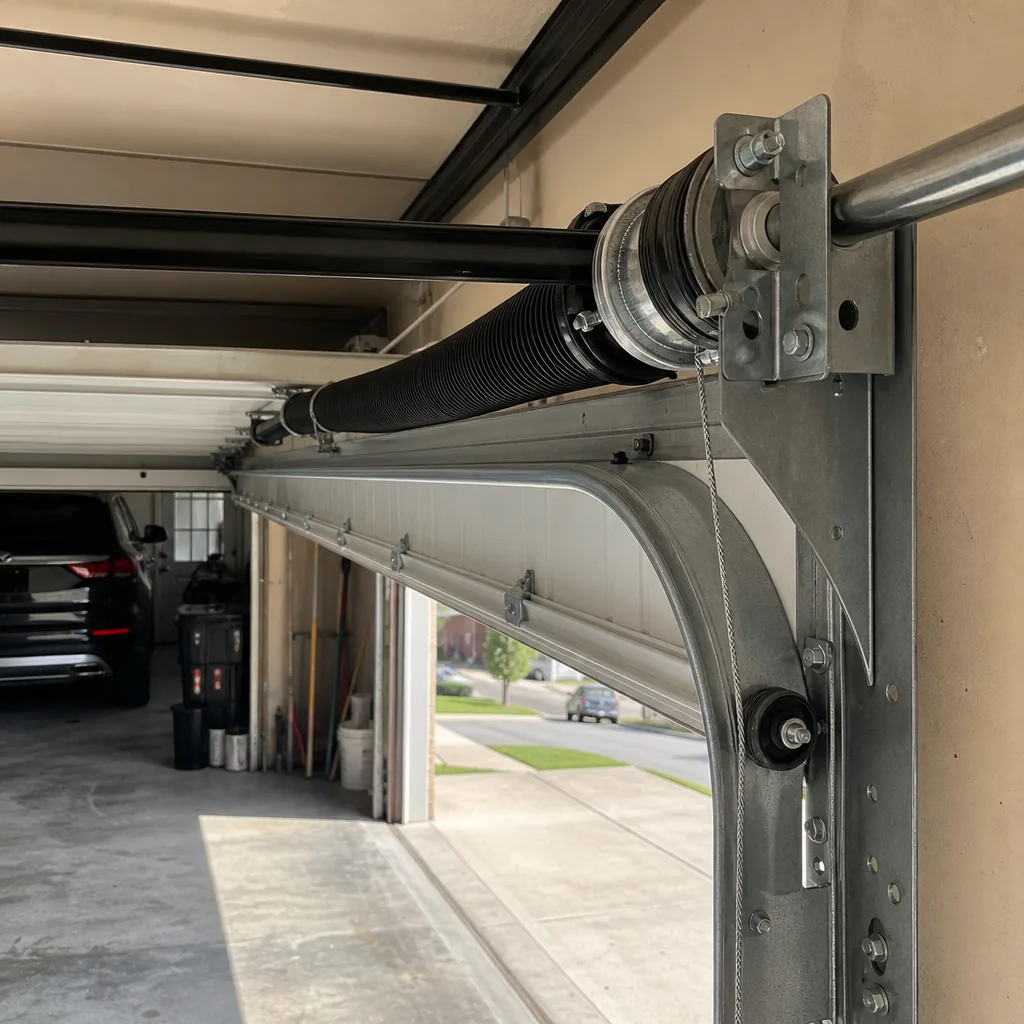
Garage doors are the heaviest moving object in your home, and the tension in the springs is enough to cause serious injury or worse. Before you attempt any inspection or repair, understand which parts are safe to touch and which are not. The torsion spring, mounted on the metal bar above the closed door, is wound under extreme tension. When it snaps, it releases all that stored energy at once, and anyone standing nearby is at risk. The cables that run along each side of the door are equally dangerous under tension. Do not attempt to remove, adjust, or replace these parts yourself. This isn’t a matter of being careful; it’s a matter of never touching them at all unless you are a trained technician.
The panels themselves are heavy. A standard 16-foot steel door weighs between 130 and 180 pounds, and if the springs are broken, the opener cannot lift that weight, and neither should you. The emergency release cord, the red rope hanging from the opener trolley, exists for one purpose: to let you disconnect the door and close it manually during a power outage or opener failure. But when the springs are broken, even a manual close is dangerous because the full weight of the door is unsupported. If you pull the release cord with the door open and a spring is broken, the door can come down faster than you can react.
One safety system you can and should test yourself is the auto-reverse feature on your opener. Place a two-by-four flat on the ground under the open door and close the door. If the door does not reverse when it touches the wood, the opener’s safety reversal is not working, and that’s a code violation and a genuine safety hazard. The photo-eye sensors, the small units mounted on each side of the door near the floor, must also be aligned and clean. Test both of these every couple of months. For anything involving springs, cables, or track under tension, call a professional. Our Garage Door Spring Repair in Houston page explains what a proper spring replacement involves and why it’s never a DIY job.
Houston Garage Door Glossary: Trade Terms in Plain Language
A good Houston garage door technician will explain what’s wrong in plain language, but it helps to know the terms before you make the call. Here are the words we use on service calls and what they actually mean.
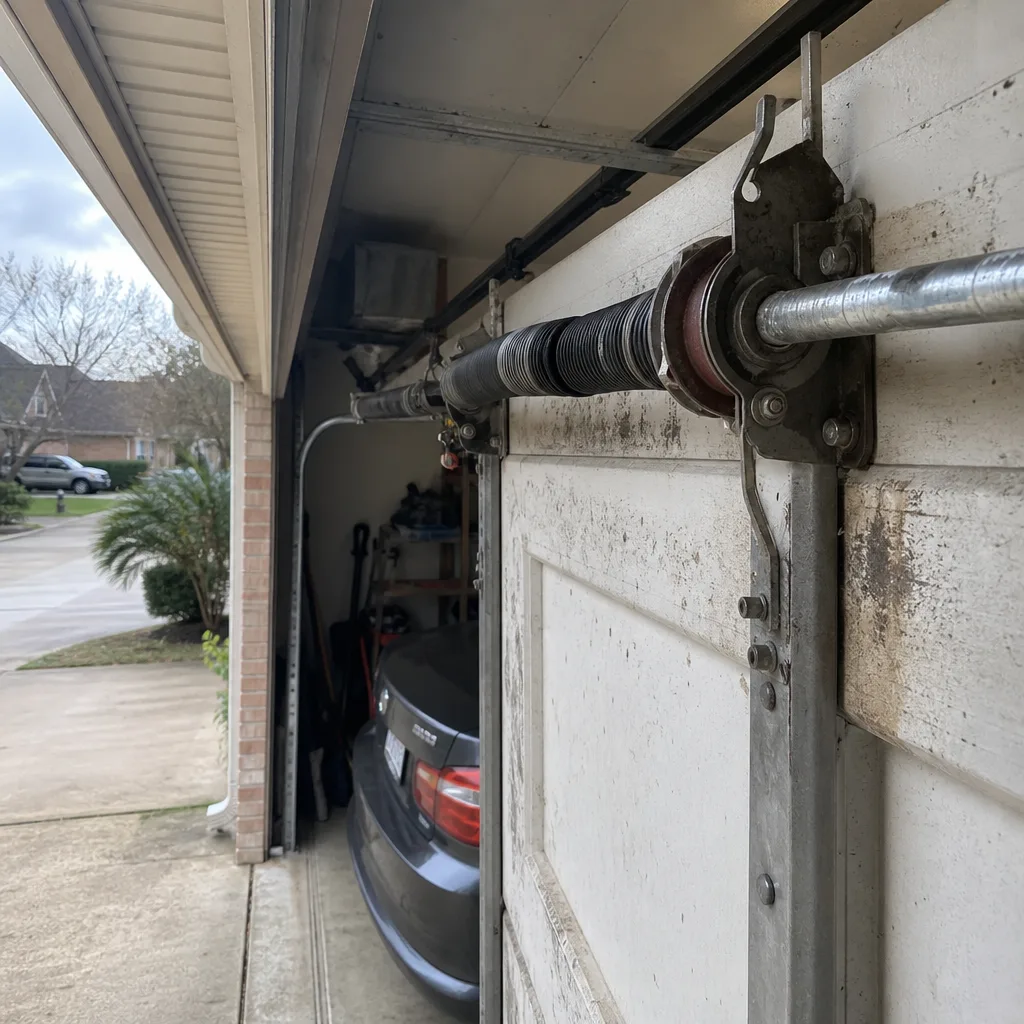
- Torsion spring: The heavy coil mounted on the metal bar above the closed door that handles most of the door’s lifting weight. It winds and unwinds as the door moves, storing energy when the door goes down and releasing it when the door opens.
- Trolley: The carriage on the opener rail that the opener motor pushes and pulls along the rail. The arm connecting the trolley to the door is what moves the door up and down.
- Limit switch: A small device inside the opener that tells the motor how far to run the door in each direction. When it’s set incorrectly, the door stops too soon or too late.
- Bottom seal: The rubber or vinyl strip attached to the bottom edge of the door that seals against the concrete floor, keeping water, leaves, and pests out of the garage.
- Rollers: The wheels attached to the sides of each door panel that ride inside the vertical and horizontal tracks. Nylon rollers are quieter; steel rollers last longer in humid air when properly lubricated.
- Track: The steel channel that guides the door from vertical to horizontal as it opens. In Houston, track misalignment from soil movement is one of the most common causes of door sticking and noise.
- Extension spring vs. torsion spring: Older Houston homes, especially those built before the 1980s, often have extension springs stretching along the horizontal tracks on either side of the door. Torsion springs, mounted above the door, are safer and now standard. If your door has extension springs, a spring break is more dangerous because the spring can fly across the garage when it fails.
- Wind load rating: A measure of how much wind pressure a door is designed to withstand. After Hurricane Ike, many Houston-area codes tightened wind load requirements for garage doors, especially in Galveston and Brazoria counties. If you’re replacing a door, ask about the wind load rating for your ZIP code.
Common Mistakes to Avoid
- Ignoring a door that’s slightly out of square. In Houston, that small binding on one side is usually the first sign of soil movement affecting the frame, and waiting turns a $200 realignment into a track replacement and panel repair.
- Choosing a door by price alone, without considering Houston humidity. A cheap 27-gauge steel door with a thin paint layer will rust in Houston within a decade, while a slightly more expensive galvanized door will last twice as long.
- Replacing springs with the cheapest option. A $30 difference in spring quality can mean the difference between an eight-year spring and a twenty-year spring. Always ask about cycle count when getting a spring quote.
- Forgetting about permits in municipalities like Bellaire or West U. An unpermitted garage door replacement can become a problem when you sell the house. Ask the installer about permits before work starts.
- Treating a garage door company like a commodity. The cheapest quote in Houston often comes from a technician who won’t be around when the door fails again in six months. Ask about the labor warranty in writing.
- Painting over rust without treating the metal first. A fresh coat of paint over active rust in humid Houston air doesn’t stop the corrosion; it just hides it until the panel fails.
See the difference
 Before
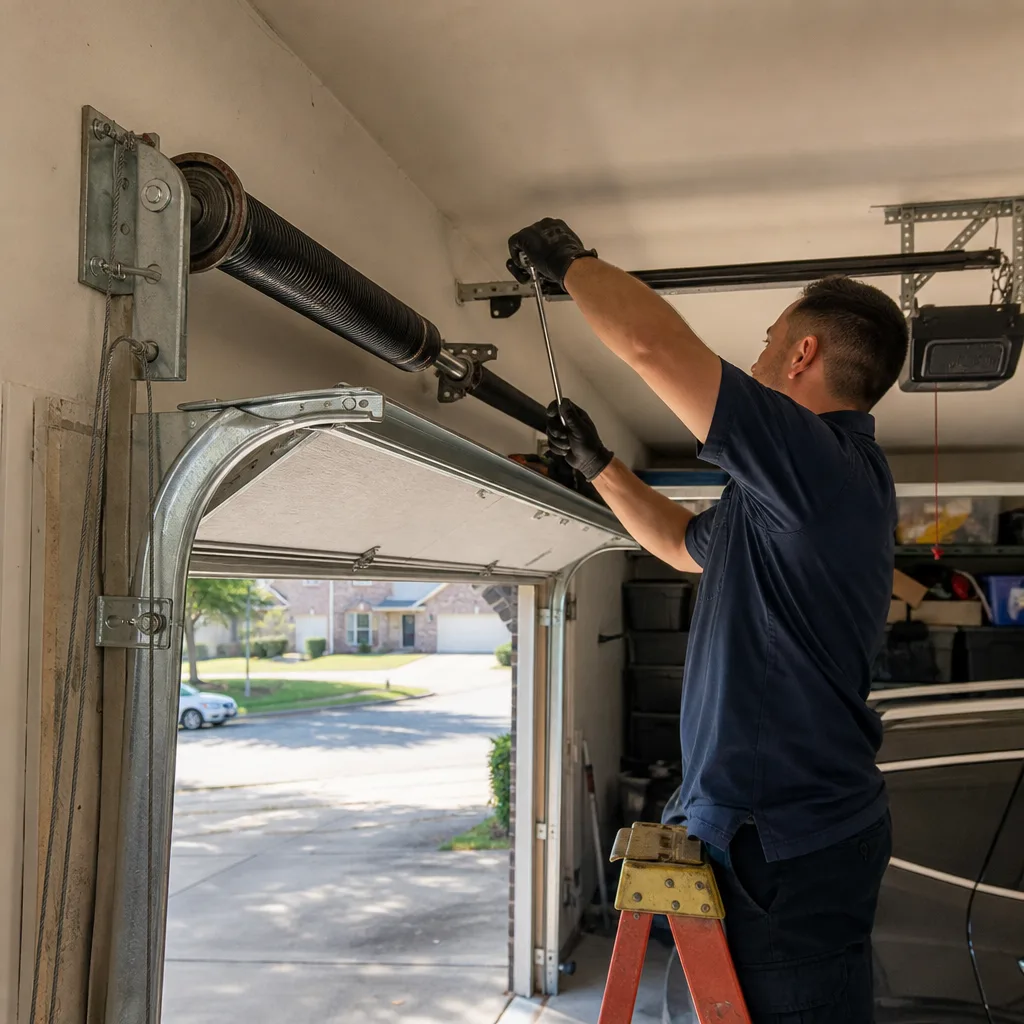 After
After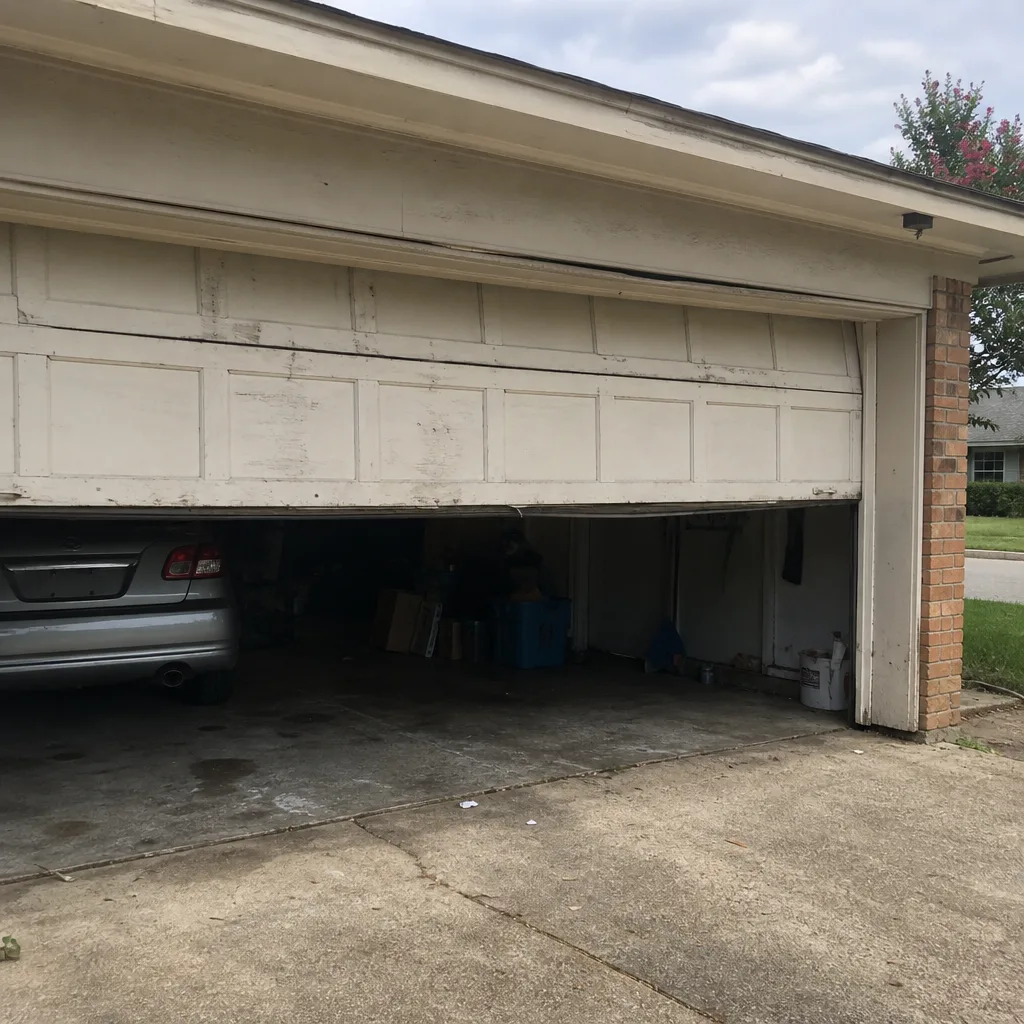 Before
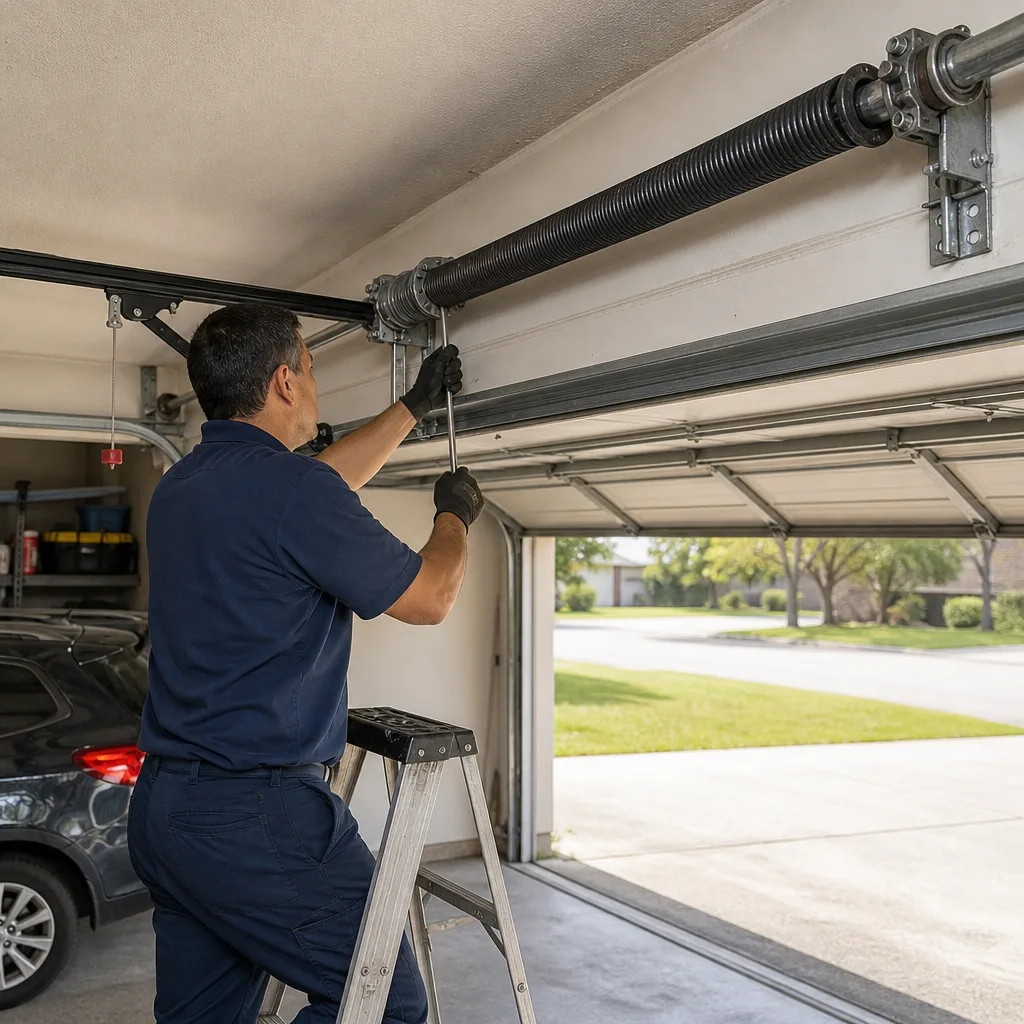 After
After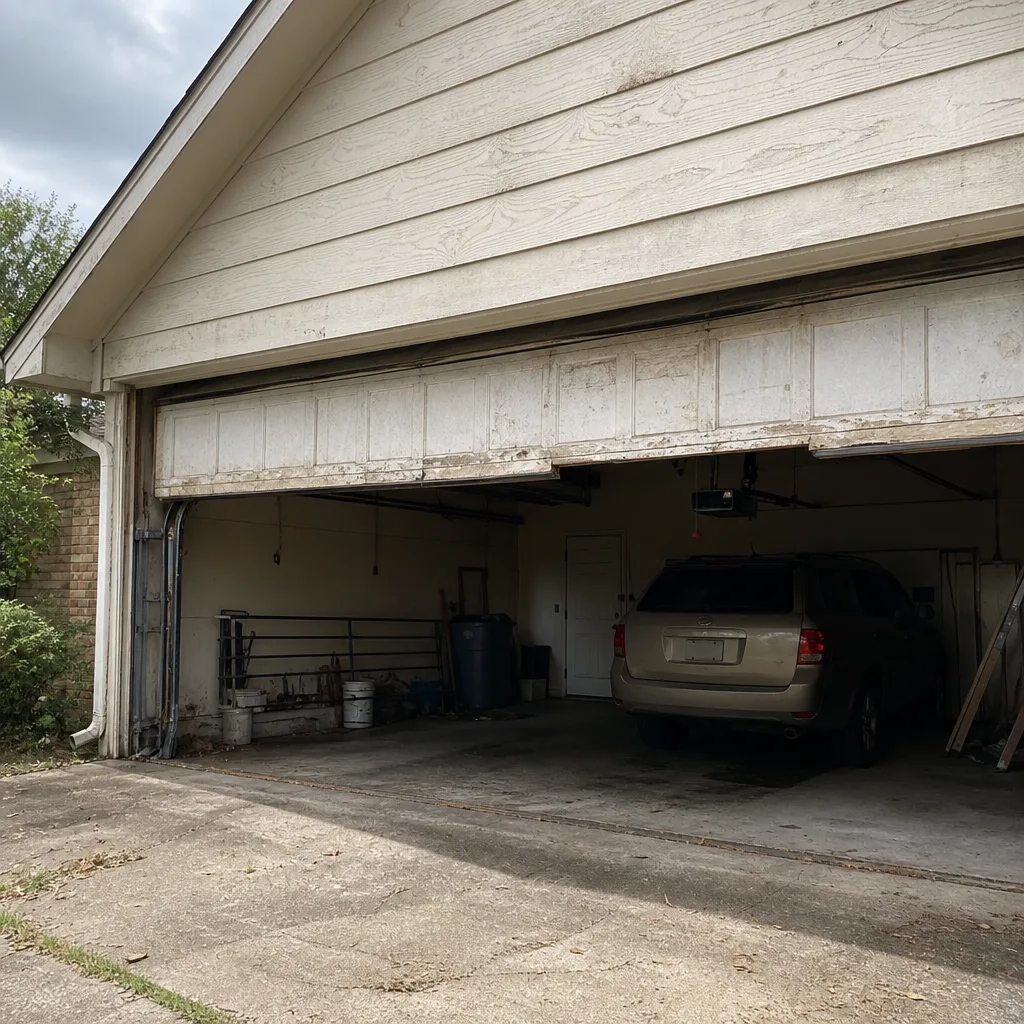 Before
 After
AfterWhen to Call a Professional
Call a garage door professional any time the problem involves tension: springs, cables, or a door that won’t lift. Call when you hear a grinding sound, when the door shakes on the way up, when one side sits lower than the other, or when the opener runs but the door doesn’t move. Call after a flood event, after a hard freeze, or after any time you’ve noticed a new gap under the door that wasn’t there before. Call when the door is more than fifteen years old and has never had the springs replaced, even if nothing seems wrong yet. And call when you want a written quote for any repair or replacement so you know the real price before you commit.
Bramwell Garage Doors Houston offers free estimates in Houston, call (903) 989-4180. A live person answers the phone 24 hours a day, seven days a week, and every quote is delivered in writing before any work begins.
Frequently Asked Questions
Most Houston garage door repairs run between $125 and $300, with torsion spring replacement typically at $150 to $280 and opener replacement at $350 to $900, depending on the opener type and door size. The price should always be quoted in writing before work starts so the invoice matches the number you agreed to. Call (903) 989-4180 for an exact quote on your repair, estimates are free.
A quality steel garage door in Houston lasts fifteen to twenty-five years, but the springs, rollers, and bottom seal will fail and need replacement multiple times during that span, usually on a seven to ten-year cycle for springs. The humidity and soil movement in Houston shorten the life of hardware compared to inland Texas markets, so regular maintenance matters more here. Ask any technician to explain what they’re seeing on your specific door.
In Houston, one-sided sticking is usually caused by the slab or frame shifting out of square as the expansive clay soil swells and shrinks with seasonal moisture changes, pulling the track out of alignment. The fix is a track realignment and often new rollers to match the corrected track position. This is a Houston-specific problem that national guides almost never mention, and it’s one of the most common calls we get.
Spring repairs and most opener replacements can often be completed the same day in Houston, because Bramwell Garage Doors Houston stocks common parts and sends technicians out with spring inventory on the truck. Track realignments and more involved work may take a bit longer depending on the condition of the door and hardware. Call (903) 989-4180 and we’ll tell you how quickly we can get to your address.
No, the price you’re quoted is the price you pay, because Bramwell Garage Doors Houston delivers a written price before any work starts, not after the fact. That written quote covers the repair, the parts, and the labor, and if the technician finds a significant additional problem, you’ll get a new written price and the option to decline. The Kingswell standard has worked this way since 2001.
Yes, Bramwell technicians carry common torsion springs, bottom seals, rollers, and opener parts in their vehicles, so most Houston repairs are completed in a single visit. Less common parts, especially custom-sized door sections or specialty hardware, may require a follow-up appointment, but you’ll know before the technician leaves your driveway. Call (903) 989-4180 to schedule a visit and we’ll confirm the likely timeline over the phone.
The Bottom Line
Your garage door is a mechanical system that has to work reliably in one of the tougher climates in the country: expansive clay soil that shifts with the seasons, Gulf Coast humidity that rusts metal faster than inland air, and UV exposure that breaks down finishes and adhesives. Understanding those Houston-specific forces helps you make smarter decisions about materials, maintenance, and repairs. The most important decision you’ll make is who you call when something goes wrong. Ask for a written price. Ask what the labor warranty covers and for how long. Ask about the parts you’re paying for, including spring cycle count and steel gauge. And when you need a straight answer or a repair in Houston, call (903) 989-4180. We’ll give you the real number before the work starts, and we’ll put the guarantee in writing.
Written by Marcus Ellery, Owner at Bramwell Garage Doors Houston, serving Houston since 2001.